Salami vs. Sopressata: 8 Key Differences You Need to Know
When it comes to building the perfect charcuterie board, knowing the difference between various cured meats can elevate your culinary experience. Salami and sopressata stand as two pillars in the world of Italian cured meats, each bringing unique characteristics to the table. While they might look similar at first glance, these delicious cured sausages have distinct differences worth exploring.
I've been obsessed with charcuterie boards since my first visit to Italy years ago. After tasting authentic versions of both meats in their regions of origin, I realized how much depth there is to these seemingly simple foods. Let me walk you through what makes each special, based on both research and my personal tasting adventures.
In this comprehensive guide, we'll slice through the confusion and explore everything from their origins and production methods to flavor profiles and best uses in cooking. Whether you're a culinary enthusiast or simply curious about what makes these two popular cured meats different, you'll discover why each deserves a special place in your kitchen.
What is Salami? Origins and Characteristics
Traditional salami is a cured sausage with Italian origins, though varieties now exist worldwide. The word "salami" actually comes from the Italian word "sale" meaning salt, highlighting its preservation method. This delicious cured meat has been crafted for centuries as a way to preserve meat before refrigeration was available. Who knew that necessity would create something so delicious?
The preparation of salami involves grinding meat (traditionally beef or pork, though venison and poultry versions exist) and mixing it with spices, herbs, salt, minced fat, and sometimes vinegar. This mixture is then stuffed into casings and hung to dry, initiating the fermentation process that gives salami its distinctive flavor and chewy texture. Beneficial bacteria play a crucial role here, while the salt draws moisture from the meat – a process that can take months to complete properly.
When shopping, you might encounter both "cured" and "uncured" salami. Don't be fooled by the terminology! Uncured salami simply means it's been preserved with natural curing agents like salt rather than chemical preservatives such as sodium nitrate. Both versions undergo curing – just through different methods.
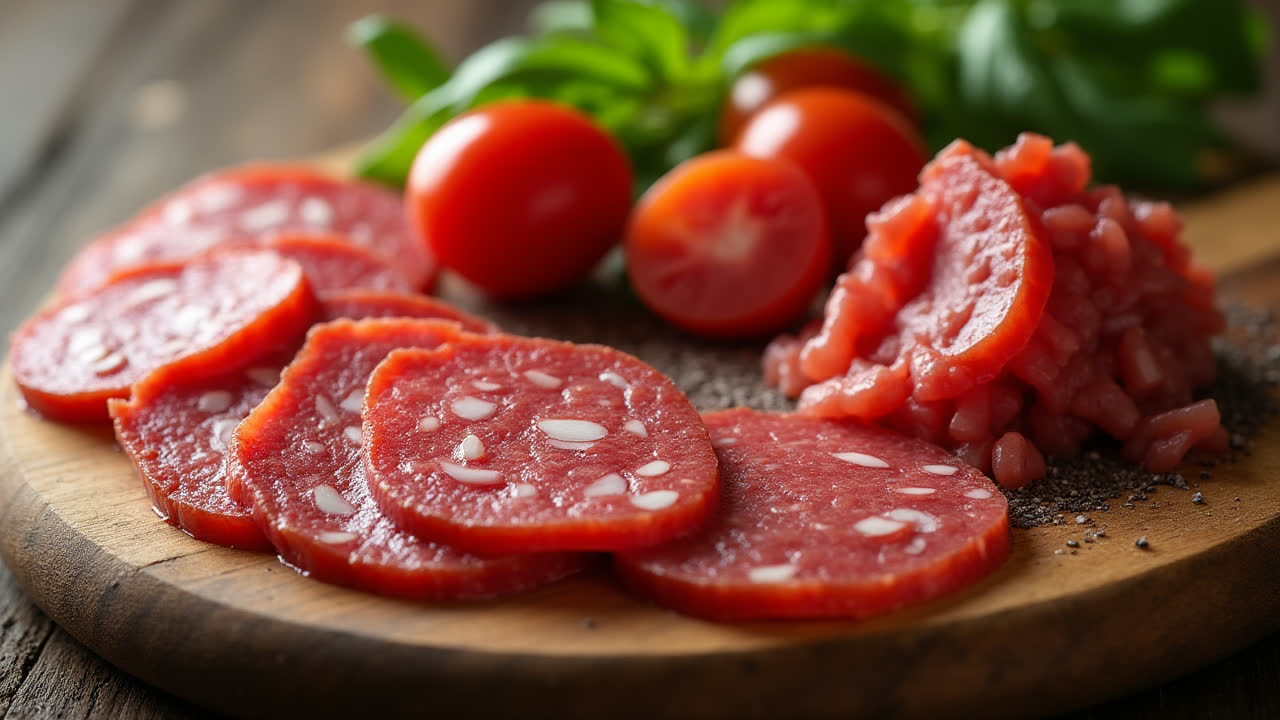
Salami typically has a round shape when sliced and features a somewhat moist, slightly greasy texture with a pronounced garlic flavor. The fat distribution appears as small, evenly distributed white specks throughout the meat. I find the texture particularly satisfying – firm enough to bite through but still tender, with just the right amount of chewiness that makes it perfect for sandwiches.
What is Sopressata? Regional Variations and Distinctive Traits
Sopressata (sometimes spelled soppressata or sopressa) is actually a type of salami with specific characteristics that set it apart. Its name comes from the Italian word "sopressare," meaning "to press," referring to how it's traditionally pressed during curing. It originated as a specialty of Calabria in southwestern Italy, though regional variations exist throughout the country.
Northern Italian sopressata, particularly Sopressa di Vicentina from the Veneto region, often incorporates aromatic spices like garlic, cinnamon, cloves, and black peppercorns. Southern varieties, typical of Calabrian cuisine, feature a more restrained spice profile but incorporate dried chili peppers, giving them a distinctive heat. I still remember my first taste of Calabrian sopressata – that subtle kick of heat at the end completely changed my understanding of what cured meat could be!
What truly distinguishes sopressata is its use of higher-quality, leaner cuts of pork, often from the shoulder or ham. This results in larger visible chunks of fat compared to regular salami, and a drier, less greasy texture. Traditional sopressata is also pressed during curing, resulting in a flatter, more irregular shape than the perfectly round salami.
The flavor profile of sopressata can be reminiscent of pepperoni, especially in the spicier southern Italian varieties, but with more complexity and depth. The larger fat pieces create pockets of richness that burst with flavor when you bite into them. This unique texture makes it particularly enjoyable when sliced slightly thicker than typical salami – something I always do when serving it to guests.
Salami vs. Sopressata: A Detailed Comparison
| Characteristic | Salami | Sopressata |
|---|---|---|
| Definition | A broad category of cured sausage made from fermented and/or air-dried meat | A specific type of fermented and dried Italian salami |
| Classification | General category of dried sausage | A specific type of salami |
| Meat Cuts | Typically uses fattier cuts of meat | Uses leaner, higher-quality cuts of meat |
| Shape | Round, uniform shape | Flatter, pressed appearance with irregular shape |
| Fat Distribution | Small, evenly distributed fat particles | Larger, more distinct chunks of fat |
| Flavor Profile | Often features pronounced garlic flavor | Can taste similar to pepperoni, often with heat from chili |
| Texture | Slightly moist, somewhat greasy texture | Drier texture with more distinct fat pockets |
| Regional Origins | Various regions throughout Italy and beyond | Primarily Calabria and Veneto regions of Italy |
Having tried numerous varieties of both, I've found that the texture difference is often the most immediately noticeable. Salami tends to have that slight moisture that makes it perfect for sandwiches, while sopressata's drier texture and larger fat chunks create a more complex mouth feel that works wonderfully on charcuterie boards.
Culinary Uses and Pairing Suggestions
Both salami and sopressata shine in different culinary applications, though there's certainly overlap in how they can be used. Understanding their unique characteristics can help you choose the right one for specific dishes.
Salami's uniform texture and balanced fat content make it exceptionally versatile. It works beautifully in sandwiches, where its slight moisture prevents it from drying out the bread. I've found it particularly excellent in Italian sub sandwiches, where it pairs wonderfully with provolone and other traditional ingredients. Salami also adds wonderful flavor to pasta dishes when diced and lightly crisped, imparting rich umami to the entire dish. When serving salami on a charcuterie board, I prefer to slice it quite thin to showcase its even marbling.
Sopressata, with its more distinctive flavor profile and interesting texture, really stands out on a charcuterie board. Those larger chunks of fat create beautiful visual contrast when sliced, and the more complex spicing makes it an attention-grabbing addition. I generally slice sopressata a bit thicker than regular salami to highlight those textural differences. It pairs wonderfully with sharper cheeses like aged provolone or pecorino that can stand up to its more pronounced flavor. Have you ever tried sopressata with a drop of good honey? The contrast between sweet and savory is absolutely magnificent!
Both meats pair excellently with traditional accompaniments like olives, pickled vegetables, and crusty bread. For wine pairings, salami's milder flavor works well with medium-bodied reds like Chianti or Barbera, while sopressata's more robust profile can stand up to fuller-bodied options like Primitivo or Nero d'Avola. When I'm feeling adventurous, I sometimes pair spicy Calabrian sopressata with a slightly chilled Lambrusco – the slight sweetness and bubbles create a beautiful contrast.
Health and Nutritional Considerations
As delicious as both these cured meats are, it's worth understanding their nutritional profiles. Both salami and sopressata are relatively high in fat and sodium, as is typical with most cured meats. However, there are some subtle differences between them.
Sopressata, with its leaner meat cuts, may contain slightly less fat overall compared to traditional salami, though this can vary significantly by producer. The larger fat chunks in sopressata might actually make it easier to trim away some fat if desired, whereas salami's more evenly distributed fat is integral to its texture and flavor. Neither option would be considered a "diet" food, but hey – life's about balance, right?
Both meats contain beneficial proteins and nutrients, including B vitamins and minerals. The fermentation process they undergo also creates beneficial bacteria that some research suggests may have positive effects on gut health. Of course, moderation is key with any preserved meat product due to sodium and fat content.
If you're watching your intake, consider enjoying these meats as occasional treats rather than daily staples. I've found that using small amounts of either as a flavor enhancer in dishes like pasta, salads, or vegetable-based soups can provide the satisfying taste without consuming large portions. And quality matters – artisanal versions made with higher-quality ingredients and traditional methods often deliver more flavor satisfaction in smaller quantities than mass-produced alternatives.
Frequently Asked Questions
Can I substitute salami for sopressata in recipes?
Yes, you can substitute salami for sopressata in most recipes, though the final flavor and texture will differ slightly. Salami has a more uniform texture and generally milder flavor, while sopressata offers larger fat chunks and often a spicier profile. For pizza toppings or sandwiches, the substitution works well. If a recipe specifically calls for sopressata's distinctive texture or flavor profile, the dish might lose some of its intended character with regular salami. Consider the specific dish's needs before substituting.
How should I store salami and sopressata to maintain freshness?
For optimal freshness, store whole, unopened salami and sopressata in a cool, dry place like your pantry or a cellar. Once cut, wrap them tightly in butcher paper or parchment paper first, then in plastic wrap to prevent them from drying out while still allowing some airflow. Store in the refrigerator, where they'll typically last 2-3 weeks. Avoid airtight plastic containers alone, as these can trap moisture and accelerate spoilage. For longer storage, you can freeze sliced salami or sopressata for up to 2 months—separate slices with parchment paper for easy thawing of individual portions.
What are some artisanal varieties of salami and sopressata worth trying?
For extraordinary salami experiences, seek out Finocchiona (Tuscan salami with fennel), Saucisson Sec (French-style dry salami), or Cacciatore (hunter's salami with garlic and wine). Among sopressata varieties, Calabrian sopressata offers fantastic heat from chili peppers, while Sopressa Vicentina DOP from the Veneto region delivers wonderful complexity with its blend of spices. Small-batch producers often create the most memorable versions – look for those using heritage breed pork, traditional fermentation methods, and natural casings. Local Italian markets or specialty food shops typically carry higher-quality options than standard supermarkets, and many artisanal producers now ship nationally.
Conclusion: Choosing Between Salami and Sopressata
The difference between salami and sopressata goes beyond mere terminology. While they share the basic concept of being delicious cured meats, their unique characteristics make each special in its own way. From the leaner cuts and distinctive pressing of sopressata to the more uniform texture and versatility of salami, each brings something valuable to your culinary arsenal.
Rather than declaring one superior to the other, I've come to appreciate how they complement each other. A well-curated charcuterie board might feature both – perhaps a classic Genoa salami alongside a spicy Calabrian sopressata – offering guests a chance to compare and contrast these wonderful traditions.
Whether you're building the perfect sandwich, topping a homemade pizza, or crafting an impressive appetizer spread, understanding the nuances between these two cured meats will help you make better-informed choices. And perhaps most importantly, it deepens our appreciation for the centuries of tradition and craftsmanship behind these seemingly simple delicacies.
What's your favorite way to enjoy these Italian cured meats? Have you noticed the textural differences between them? Whatever your preference, there's no denying that both salami and sopressata deserve their celebrated status in the world of charcuterie.