Salamander vs Lizard: 12 Critical Differences You Should Know
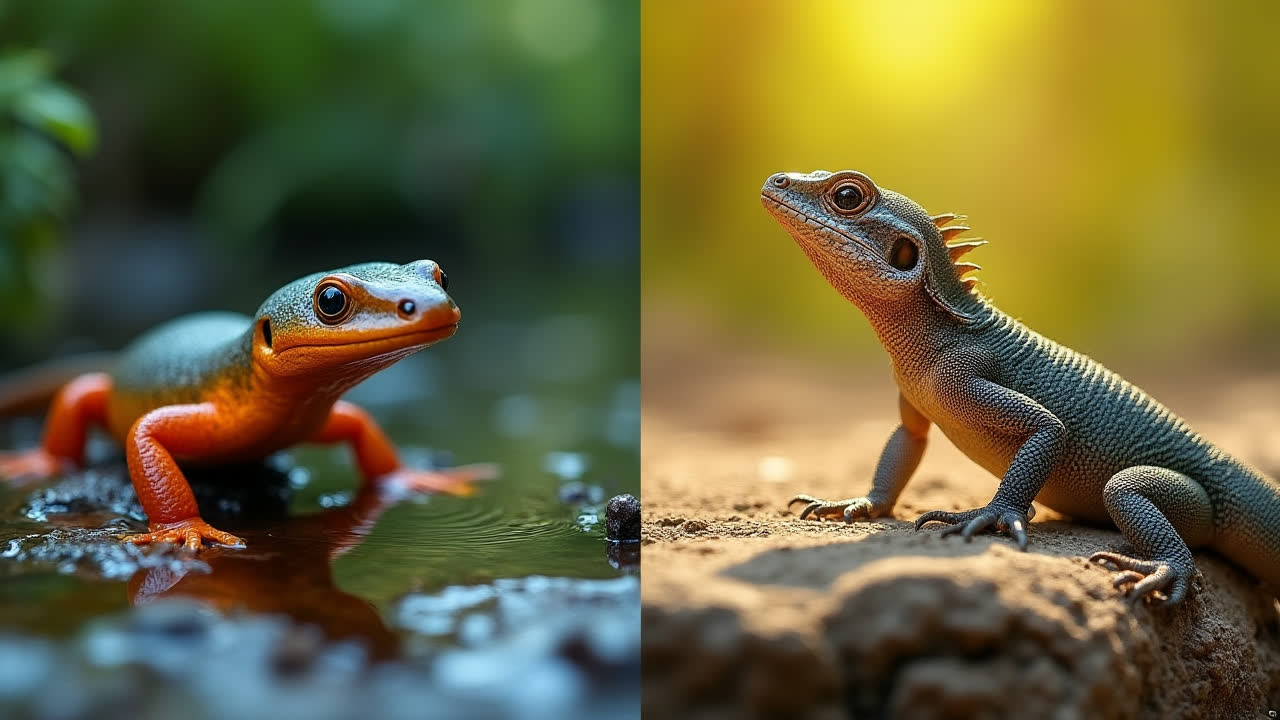
At first glance, salamanders and lizards might look remarkably similar. Both have four legs, long tails, and seem to move in similar ways across the ground. But don't be fooled by appearances! These fascinating creatures belong to entirely different animal classes and have evolved distinct characteristics that set them apart. Have you ever wondered why salamanders need to stay in damp environments while lizards thrive in dry, sunny locations?
The confusion between these two animals is completely understandable. I've had friends confidently point to a salamander and call it a lizard (and I've made the same mistake myself). But understanding the differences between salamanders and lizards isn't just about winning nature trivia nights – it's about appreciating the remarkable diversity of adaptations that allow these animals to thrive in their respective habitats.
In this comprehensive guide, we'll explore the fundamental distinctions between amphibians and reptiles by examining these two fascinating creatures. From their skin texture and habitat preferences to their reproductive strategies and defensive mechanisms, we'll cover everything you need to know to become an expert at telling these animals apart. Whether you're considering one as a pet, encountered one in the wild, or simply curious about nature's diversity, this comparison will give you a new appreciation for both salamanders and lizards.
Understanding Salamanders: The Amphibian Perspective
Salamanders belong to the class Amphibia, order Caudata, which comprises approximately 600 species across nine families. These fascinating creatures are characterized by their moist, smooth skin that lacks scales – a feature that immediately distinguishes them from their reptilian lookalikes. When I first held a salamander (with properly washed hands, of course), I was surprised by how delicate and slightly slimy its skin felt, nothing like the dry, rough texture of lizards.
The size of salamanders can vary dramatically, from tiny woodland species measuring just a few inches to the impressive Japanese giant salamander that can grow up to six feet in length! However, most common species you'll encounter typically range between 4-8 inches long. Their bodies are generally elongated with relatively short legs positioned at the sides of their bodies, giving them their characteristic creeping movement pattern.
One of the most distinctive features of salamanders is their unique life cycle, which reflects their amphibian heritage. Most species begin life as aquatic larvae with external gills, similar to tadpoles in frogs. As they undergo metamorphosis, they develop lungs and the ability to live on land, though they remain dependent on moist environments. This dual life adaptation is reflected in the word "amphibian" itself, which means "double life" in Greek.
Salamanders have evolved some remarkable characteristics for survival. Many possess specialized skin glands that secrete toxins to deter predators. The bright, warning coloration of species like the fire salamander serves as a visual deterrent, essentially advertising their toxicity to potential threats. And in perhaps one of nature's most impressive regenerative feats, many salamander species can regrow lost limbs, tails, and even parts of major organs like the heart – an ability that continues to fascinate medical researchers for its potential applications in human medicine.
Understanding Lizards: The Reptilian Approach
Lizards belong to the class Reptilia, specifically the order Squamata, which they share with snakes. With over 6,000 species identified worldwide, lizards represent one of the most diverse reptile groups on the planet. Their evolutionary adaptations have allowed them to colonize almost every continent except Antarctica, thriving in environments ranging from lush rainforests to arid deserts.
The defining characteristic of lizards is their scaly skin, which serves as a crucial adaptation for terrestrial life. These scales form a waterproof barrier that prevents dehydration, allowing lizards to venture into dry habitats that would be fatal for amphibians like salamanders. The texture of these scales varies considerably between species – some are smooth and flat, while others might be ridged, spiny, or even bead-like. I've always found it fascinating how lizard skin feels simultaneously smooth yet textured when you run your finger along it in the direction of the scales.
Lizards also possess several distinctive features that set them apart from salamanders. Most species have external ear openings and movable eyelids, adaptations not found in their amphibian counterparts. Their legs tend to be longer and positioned more directly beneath their bodies, allowing for faster movement. Many species can run at impressive speeds when threatened, with some even capable of running briefly on their hind legs – a behavior you'll never observe in salamanders.
Perhaps one of the most well-known lizard adaptations is the ability of many species to shed their tails when grabbed by predators – a defense mechanism known as autotomy. The detached tail continues to wiggle, distracting the predator while the lizard escapes. Over time, the lizard can regenerate its tail, though the replacement is usually not identical to the original. This ability, while impressive, differs from salamanders' regeneration in both mechanism and extent.
Unlike amphibians, lizards are fully terrestrial creatures that have evolved complete independence from aquatic environments. Their eggs feature a leathery shell and protective membranes that prevent dehydration, allowing them to be laid on land. When lizard hatchlings emerge, they appear as miniature versions of adults, bypassing the metamorphosis phase characteristic of amphibians like salamanders. Isn't it remarkable how these two seemingly similar animals have evolved such different approaches to reproduction?
Key Differences Between Salamanders and Lizards
| Characteristic | Salamander | Lizard |
|---|---|---|
| Classification | Amphibia (Order Caudata) | Reptilia (Order Squamata) |
| Skin Type | Moist, smooth, non-scaly | Dry, rough, covered with scales |
| Limbs | Short legs with 4 fingers, 5 toes | Longer legs with 5 fingers, 5 toes |
| Habitat | Damp environments, often near water | Various terrestrial environments, including dry areas |
| Reproduction | Internal fertilization, gelatinous eggs | External fertilization, leathery eggs |
| Development | Incomplete metamorphosis with larval stage | No metamorphosis, young resemble adults |
| Respiration | Gills as larvae, lungs or skin as adults | Lungs throughout life |
| Defense Mechanism | Toxic skin secretions, bright warning colors | Tail autotomy, biting, spines, camouflage |
| Cranial Nerves | 10 pairs | 12 pairs |
| Waste Product | Ammonia | Uric acid |
| Ear Openings | Absent | Present |
| Claws | Absent | Present |
Biological Adaptations and Evolutionary Differences
The divergent evolutionary paths of salamanders and lizards have led to fascinating biological adaptations that reflect their respective life strategies. Salamanders, as amphibians, have retained many primitive vertebrate characteristics, including a dependence on water or moisture for at least part of their life cycle. Their permeable skin serves a dual purpose – not only does it allow for cutaneous respiration (breathing through the skin), but it also makes them extremely sensitive to environmental changes and pollutants. This is why amphibians like salamanders are often considered biological indicators or "canaries in the coal mine" for ecosystem health.
One surprising adaptation in salamanders is their remarkable resistance to cold temperatures. Several species, particularly those found in northern regions, produce natural "antifreeze" compounds that allow them to survive partial freezing during winter. I once found a salamander under a log during early spring in the mountains, and was amazed that it could survive such frigid conditions. Their metabolism can slow dramatically during cold periods, allowing them to endure long stretches with minimal food.
Lizards, in contrast, have evolved a suite of adaptations that enable them to thrive in arid environments unavailable to amphibians. Their waterproof, keratinized scales represent a major evolutionary advantage, drastically reducing water loss through the skin. Many desert-dwelling species have developed specialized behaviors to regulate body temperature, including basking in the morning sun to warm up quickly and retreating to burrows during the hottest parts of the day. Some species can even change color to help with thermoregulation – darker colors absorb more heat, while lighter colors reflect it.
The divergence in excretory systems between these groups is particularly noteworthy. Salamanders primarily excrete ammonia, which requires substantial water to dilute this toxic waste product – a sensible strategy for creatures living in moist environments. Lizards, however, have evolved to excrete uric acid, which requires minimal water and can be eliminated as a semi-solid paste. This adaptation drastically reduces water requirements and represents one of the key innovations that allowed reptiles to fully colonize terrestrial environments.
From a neurological perspective, the difference in cranial nerve count (10 pairs in salamanders versus 12 pairs in lizards) reflects the overall greater complexity of reptilian nervous systems. Lizards possess more sophisticated sensory apparatus, including specialized vision adaptations and, in some species, heat-sensing pits. Their increased brain complexity supports more varied behavioral repertoires than those typically observed in salamanders. Who would have thought that counting nerves could tell us so much about evolutionary history?
Habitat and Lifestyle Considerations
The distinct biological characteristics of salamanders and lizards directly influence their habitat preferences and lifestyles. Salamanders are primarily creatures of damp, shaded environments such as deciduous forests, cave systems, and areas near streams or ponds. Their permeable skin makes them highly vulnerable to dehydration, restricting them to microhabitats where moisture levels remain relatively high. You'll often find them under rocks, logs, or leaf litter – places that maintain the humidity they require for survival.
The activity patterns of salamanders reflect their moisture requirements as well. Many species are primarily nocturnal, emerging from their hiding places during the cooler, more humid evening hours to forage. During dry periods, they may remain completely inactive, sheltering in moist retreats until conditions improve. This reliance on environmental moisture creates a patchwork distribution for many salamander species, with populations concentrated around suitable habitat islands.
Lizards, armed with their water-conserving adaptations, can exploit a much wider range of habitats. From tropical rainforests to scorching deserts, lizards have successfully colonized almost every terrestrial ecosystem except the most extreme polar regions. Their independence from standing water has allowed them to thrive in environments where amphibians simply cannot survive. Many desert-dwelling species can obtain all the moisture they need from their food, never needing to drink free water.
Unlike most salamanders, many lizard species are diurnal (active during daylight hours) and rely heavily on visual cues for hunting and communication. Their activity is often closely tied to temperature rather than humidity, with peak activity occurring during optimal temperature windows. During extreme temperature periods, lizards may become temporarily inactive – a state known as torpor – but this differs fundamentally from the moisture-driven inactivity of salamanders.
The dietary habits of these animals also reflect their different evolutionary strategies. While both are primarily carnivorous, salamanders typically focus on slow-moving prey like worms, slugs, and insects, which they can capture with their relatively slow movements. Lizards, with their greater speed and stamina, often pursue more active prey and have diversified into numerous dietary niches. Some species are insectivores, others specialize in eating plants, while monitors and tegus will actively hunt small vertebrates. A few lizard species have even evolved herbivorous diets, a feeding strategy not observed in salamanders.
Keeping Salamanders and Lizards as Pets: Important Considerations
Both salamanders and lizards have gained popularity as pets, but their fundamentally different biological requirements mean that caring for them properly requires different approaches. If you're considering either as a pet, understanding these differences is crucial for providing appropriate care. I've kept both over the years, and the contrast in their care requirements is quite striking.
For salamander owners, maintaining proper humidity is absolutely essential. Their enclosures must include a moisture-retaining substrate, such as coconut fiber or sphagnum moss, that can hold humidity without becoming waterlogged. Many species also benefit from a shallow water dish or partially aquatic setup, depending on the specific species. Temperature management is equally important – most salamanders prefer cool temperatures between 60-70°F (15-21°C), making them unsuitable pets for homes without climate control in hot regions.
Handling salamanders presents special challenges. Their permeable skin can absorb oils, salts, and chemicals from human hands, potentially causing harm to the animal. Additionally, some species secrete toxins that can irritate human skin or mucous membranes. For these reasons, salamanders are generally considered "look but don't touch" pets, best observed rather than handled regularly. When handling is necessary, wearing clean, damp, powder-free gloves is advisable.
Lizards, with their diverse adaptations, present a wider range of care requirements depending on the species. Desert-dwelling species like bearded dragons need warm, dry environments with temperature gradients allowing for behavioral thermoregulation, while tropical species like crested geckos require higher humidity levels (though still less than most salamanders). Unlike salamanders, many lizard species benefit from UVB lighting to facilitate vitamin D synthesis and calcium metabolism.
The handling tolerance of lizards also varies widely by species. Many commonly kept species, such as bearded dragons and leopard geckos, can become quite accustomed to gentle handling with proper socialization. Others, particularly smaller or more nervous species, may remain stressed by handling throughout their lives. Regardless of species, all reptiles should be handled with clean hands to prevent transferring harmful bacteria like Salmonella, which many reptiles naturally carry.
Perhaps the most significant difference for potential pet owners to consider is lifespan. While many common pet lizard species live 10-20 years with proper care, salamanders often have shorter lifespans in captivity, typically 5-10 years depending on the species. This longer commitment for lizard ownership should factor into any decision about which pet might be right for you. Do you really want to commit to an animal that might be with you longer than some marriages last?
Frequently Asked Questions
Can salamanders and lizards interbreed?
No, salamanders and lizards cannot interbreed. Despite their superficial similarities, these animals belong to completely different taxonomic classes (Amphibia and Reptilia respectively) that diverged in evolutionary history over 300 million years ago. This makes them more distantly related than humans and fish! Their reproductive systems, genetics, and developmental processes are fundamentally incompatible, making hybridization impossible. Each group has evolved distinct reproductive strategies adapted to their particular lifestyles and habitats.
How can I tell if I've found a salamander or a lizard?
The quickest way to distinguish between a salamander and a lizard is to look at the skin. Salamanders have smooth, moist skin without scales, while lizards have dry, scaly skin. Also, check the habitat where you found it – salamanders are typically found in damp environments like near streams or under moist logs, while lizards are often found in drier, sunnier locations. Salamanders move with a slower, wriggling motion, while lizards tend to be faster and more agile. Finally, if you can see the animal's feet, salamanders typically have four toes on their front feet and five on their back feet, while lizards usually have five toes on all feet.
Are salamanders or lizards better pets for beginners?
For most beginners, certain lizard species make better pets than salamanders. Beginner-friendly lizards like leopard geckos and bearded dragons are relatively hardy, have straightforward care requirements, and can tolerate some handling. They also tend to be more active during the day, making them more engaging pets. Salamanders, while fascinating, are generally more environmentally sensitive, require more precise humidity control, shouldn't be handled regularly due to their permeable skin, and are often nocturnal. That said, individual interests and commitment level matter most – a dedicated beginner willing to research and provide proper care can successfully keep either type of animal.
Conclusion: Appreciating Evolutionary Diversity
While salamanders and lizards may appear similar at first glance, their biological differences represent a fascinating story of evolutionary divergence and adaptation. These differences aren't merely academic distinctions – they reflect the remarkable ways that life has evolved to thrive in diverse environments through millions of years of natural selection.
Salamanders, with their permeable skin and dual-phase lifestyle, represent the ancient amphibian lineage that first ventured from water onto land but never fully severed their ties to aquatic environments. Lizards, as members of the reptile group, embody the next evolutionary step – creatures that developed adaptations allowing complete independence from water for reproduction and survival.
Understanding these differences enhances our appreciation for the natural world's complexity and the countless evolutionary innovations that have shaped life on Earth. Whether you encounter these creatures in the wild, in a zoo, or as pets, knowing how to distinguish between them and recognize their unique adaptations adds depth to the experience. So next time you spot a small, four-legged creature with a tail, take a moment to observe its characteristics – is it a salamander or a lizard? The answer tells you not just about the animal itself, but about millions of years of evolutionary history.