Solidification of Pure Metals vs Alloys: Key Differences Explained
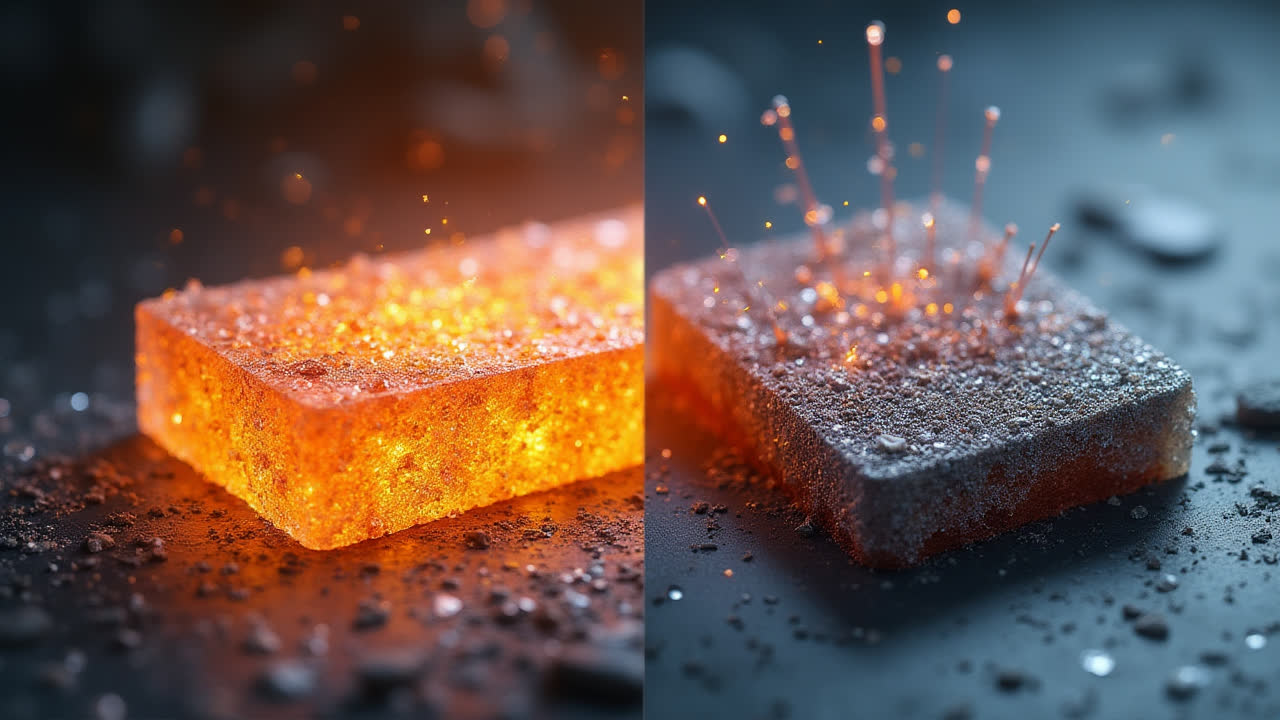
The solidification process forms the backbone of metallurgy and materials science, playing a crucial role in determining the final properties of metal products. Have you ever wondered why some metals behave differently than others when they cool from a liquid to a solid state? The answer lies in understanding the fundamental differences between how pure metals and alloys solidify.
When metals transform from liquid to solid, they undergo fascinating changes at the atomic level that ultimately determine their strength, ductility, and other important characteristics. For engineers and manufacturers, mastering these processes isn't just academic—it's essential for creating everything from aircraft components to medical implants.
In this comprehensive guide, we'll explore the distinct ways pure metals and alloys solidify, breaking down the science into accessible explanations that highlight why these differences matter in real-world applications.
Understanding Solidification in Materials Science
Solidification represents one of the most fundamental phase transformations in materials science. It's the process where atoms in a liquid metal lose their mobility and arrange themselves into ordered structures as the material cools. This transition literally shapes the internal architecture of metals and alloys, determining how they'll perform under various conditions.
The arrangement of atoms during solidification creates what materials scientists call the "microstructure"—a complex pattern of crystals and grain boundaries that can be manipulated to enhance specific properties. For instance, carefully controlled solidification can produce metals that resist fracturing at high stress or maintain strength at elevated temperatures.
Both pure metals and alloys undergo this transformation, but the pathways they follow differ significantly. These differences aren't just theoretical distinctions—they directly impact how materials are processed in foundries and manufacturing facilities worldwide. Understanding these distinctions helps engineers select the right materials and processing techniques for particular applications.
The Solidification Process in Pure Metals
When a pure metal begins to solidify, it follows a remarkably consistent pattern. The process starts with the metal heated above its melting point, creating a sea of freely moving atoms. As heat is removed and the temperature drops, these atoms begin to lose kinetic energy. At a precise temperature—unique to each metal—solidification begins.
One of the distinguishing features of pure metal solidification is that it occurs at a constant temperature. For example, pure copper solidifies at exactly 1,085°C (1,985°F). During this transition, the metal releases energy known as the latent heat of fusion while maintaining the same temperature until solidification completes. This creates what engineers call a "thermal arrest" on cooling curves—a flat plateau where the temperature remains steady despite continued heat extraction.
The solidification process involves two key steps: nucleation and growth. Nucleation occurs when small clusters of atoms arrange themselves into the beginning of crystal structures. These tiny "seeds" then grow as more atoms join the orderly arrangement. In pure metals, these crystals typically grow in a dendritic (tree-like) pattern, branching outward until they meet other growing crystals. The boundaries where these crystals meet become important structural features called grain boundaries.
Several factors influence how pure metals solidify in practical applications. The cooling rate dramatically affects the resulting microstructure—faster cooling produces smaller grains, while slower cooling allows larger crystals to form. Additionally, the presence of impurities (even in small amounts) can serve as nucleation sites, affecting how crystals form and grow. Container walls also play a role, often serving as the first nucleation sites as metal begins to solidify against them.
How Alloys Solidify: A Complex Transformation
Alloys—mixtures of two or more elements, typically metals—follow a substantially different solidification path than their pure counterparts. Instead of transforming at a single temperature, alloys solidify across a temperature range, creating what metallurgists call the "freezing range." This fundamental difference leads to numerous practical consequences in material processing and properties.
When an alloy begins to cool from its liquid state, the first solid crystals that form typically have a different composition than the remaining liquid. This phenomenon, known as segregation, occurs because most alloy systems prefer certain atomic arrangements over others. As solidification progresses, the composition of both the solid and remaining liquid continues to change, following paths dictated by phase diagrams—maps that show how compositions evolve during cooling.
The solidification range in alloys creates opportunities for diverse microstructural development. Depending on the alloy composition and cooling conditions, unique structures can form, including:
- Solid solutions, where atoms of different elements share crystal lattice positions
- Eutectic structures, featuring fine alternating layers of different phases
- Intermetallic compounds with specific composition ratios and crystal structures
- Primary dendrites surrounded by eutectic or other secondary structures
This microstructural diversity gives engineers tremendous flexibility to design alloys with tailored properties. For instance, aluminum-silicon alloys used in engine blocks develop structures that combine strength with excellent castability, while steel alloys can be manipulated to create everything from razor-sharp knife blades to earthquake-resistant building supports.
The extended solidification range also introduces challenges, particularly regarding solidification shrinkage and porosity. As different portions of an alloy solidify at different temperatures, gaps can form if liquid metal cannot flow into spaces left by contraction. This explains why controlling the solidification sequence is critical in casting operations to ensure structural integrity.
Comparative Analysis: Pure Metals vs. Alloys Solidification
| Comparison Factor | Pure Metals | Alloys |
|---|---|---|
| Solidification Temperature | Occurs at a single, specific temperature | Takes place over a temperature range (freezing range) |
| Thermal Behavior | Shows thermal arrest (flat plateau) on cooling curve | Shows sloped region on cooling curve during solidification |
| Microstructure Formation | Typically forms single-phase structure with uniform composition | Often forms multi-phase structures with composition variations |
| Solidification Shrinkage | Generally undergoes minimal and uniform shrinkage | Can experience significant and non-uniform shrinkage |
| Segregation | Minimal to none (composition is uniform) | Can experience significant microsegregation and macrosegregation |
| Casting Properties | Often more difficult to cast due to higher shrinkage | Many alloys designed specifically for improved castability |
| Cooling Rate Sensitivity | Affects grain size but not phase formation | Affects both grain size and phase distribution/morphology |
| Industrial Applications | Limited to specific electrical, thermal, or chemical applications | Widely used across virtually all industries and applications |
Industrial Applications and Implications
Understanding the differences between pure metal and alloy solidification isn't merely academic—it drives critical industrial processes across multiple sectors. Engineers leverage these distinctive behaviors to develop specialized manufacturing techniques and create materials with precisely controlled properties.
In the automotive industry, aluminum alloys with carefully designed solidification characteristics form engine blocks that combine lightness with strength. The controlled freezing range allows complex shapes to be cast with minimal defects. Similarly, aerospace applications rely on sophisticated nickel-based superalloys whose solidification behavior enables the creation of turbine blades that withstand extreme temperatures in jet engines.
The electronics industry represents another area where these differences matter significantly. Pure copper and silver are preferred for electrical connections due to their high conductivity, which stems from their uniform, defect-free microstructure after solidification. Meanwhile, solder joints use alloys specifically designed with lower melting points and controlled solidification ranges that prevent damage to sensitive components during assembly.
Medical implant manufacturers also capitalize on these distinctions, using titanium alloys whose biocompatibility and mechanical properties depend critically on their solidification behavior. The microstructure formed during solidification determines how well bone integrates with these implants, directly impacting patient outcomes.
Manufacturing processes themselves have evolved to accommodate these different solidification behaviors. Continuous casting methods for steel production, for instance, manage the extended freezing range of these alloys through carefully controlled cooling rates and mold designs. Meanwhile, specialized techniques like directional solidification and single crystal growth exploit the unique freezing characteristics of certain alloys to create materials with extraordinary properties for the most demanding applications.
Frequently Asked Questions
Why do alloys have a freezing range instead of a single freezing point?
Alloys have a freezing range rather than a single freezing point because they contain multiple elements with different atomic sizes and bonding preferences. When an alloy begins to cool, certain compositions solidify first (usually forming solid solutions richer in the higher-melting-point element), while the remaining liquid becomes enriched in lower-melting-point components. This progressive change in both solid and liquid compositions requires a range of temperatures to complete the transformation from fully liquid to fully solid. The width of this range depends on the specific alloy system and can be predicted using phase diagrams, which map how different compositions behave during heating and cooling.
How does cooling rate affect the solidification of metals and alloys?
Cooling rate profoundly affects the solidification process and resulting microstructure in both pure metals and alloys. In pure metals, faster cooling primarily produces finer grains because there's less time for crystal growth before adjacent grains impinge on each other. In alloys, cooling rate not only affects grain size but can fundamentally alter which phases form and their distribution. Rapid cooling can "freeze in" non-equilibrium structures, suppress the formation of certain phases, and reduce segregation. This is why casting processes carefully control cooling rates—ranging from rapid cooling for fine structures in investment casting to slower, controlled cooling for large steel castings where internal stresses must be minimized. Some advanced processing techniques like rapid solidification can achieve cooling rates of millions of degrees per second, creating unique microstructures impossible to produce through conventional methods.
What causes solidification defects, and how do they differ between pure metals and alloys?
Solidification defects arise from various mechanisms during the liquid-to-solid transformation. In pure metals, the primary defects include gas porosity (from dissolved gases), shrinkage cavities (from volume contraction during solidification), and hot tears (from mechanical restraint during contraction). Alloys experience these same issues but face additional challenges due to their freezing range. The extended solidification interval in alloys creates a "mushy zone" where solid and liquid coexist, making it difficult for liquid metal to flow into shrinking areas. This leads to more complex shrinkage patterns, centerline shrinkage in castings, and microsegregation that can form brittle phases at grain boundaries. Alloys are also more susceptible to hot cracking when the last liquid to solidify forms a thin film between solid grains that cannot accommodate strain. Foundry engineers mitigate these defects through proper gating and riser design, controlled cooling, and sometimes by modifying alloy compositions specifically to improve castability.
Conclusion
The stark contrast between pure metal and alloy solidification represents one of the most fundamental concepts in materials science and metallurgical engineering. Pure metals transform at a constant temperature with relatively simple microstructural development, while alloys solidify across temperature ranges, creating complex and diverse internal structures.
These differences aren't just theoretical—they drive practical decisions in manufacturing processes worldwide. Whether designing a new alloy for 3D printing, troubleshooting casting defects, or developing advanced materials for extreme environments, engineers must thoroughly understand these solidification principles.
As materials science continues advancing, researchers are finding new ways to control solidification processes at increasingly finer scales. From rapid solidification techniques that produce novel amorphous metals to controlled directional solidification for turbine blades, the future promises even greater control over these fundamental transformations.
By mastering the science behind these different solidification behaviors, engineers can continue pushing the boundaries of what's possible in materials performance, enabling the next generation of technologies that will shape our world.