Porcupine vs Hedgehog: 12 Key Differences You Should Know
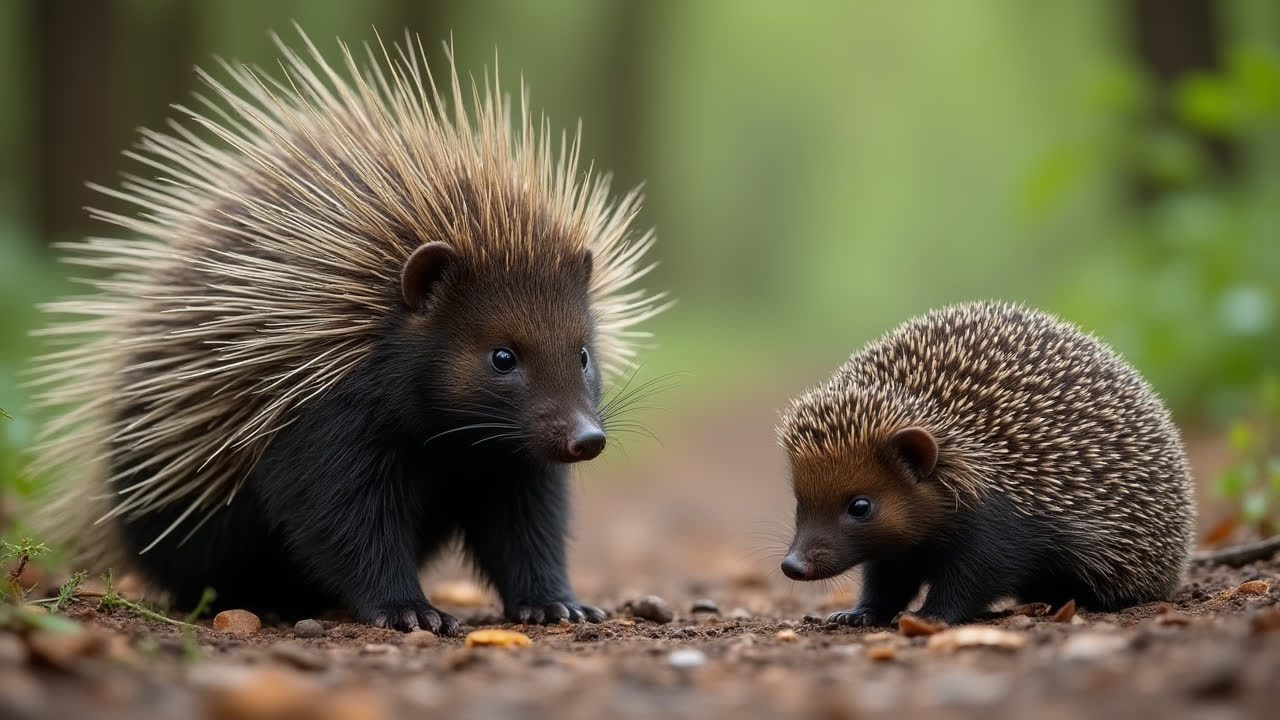
Have you ever mistaken a porcupine for a hedgehog or vice versa? You're not alone! These prickly mammals may appear similar at first glance, but they're quite different creatures with fascinating unique characteristics. While both animals sport protective quills, the similarities largely end there. From size and behavior to habitat and diet, porcupines and hedgehogs have evolved distinct traits that set them apart in the animal kingdom.
As someone who's spent countless hours observing these remarkable creatures at wildlife sanctuaries, I've come to appreciate their charming peculiarities. I once had the surprising pleasure of watching a North American porcupine skillfully climb a tree—something you'd never see a hedgehog do! Let's dive into the world of these spiny mammals and uncover what makes each one special in its own right.
Understanding Porcupines: Nature's Prickly Giants
Porcupines are large, slow-moving rodents characterized by their impressive array of sharp quills. These remarkable creatures belong to the order Rodentia and are distributed across diverse regions including North and South America, Africa, Europe, and parts of Asia. What many people don't realize is that there are actually two main types of porcupines: Old World Porcupines (found in Europe, Africa, and Asia) and New World Porcupines (native to North, South, and Central America).
One of the most striking features of porcupines is their size. These animals can grow quite large, reaching lengths of 20-36 inches and weighing up to an impressive 15 kg. Their rounded faces and broad feet with long claws are perfectly adapted for their lifestyle, which often includes climbing trees—particularly among New World species. I've observed porcupines moving with surprising agility through forest canopies, using their long, muscular tails for balance.
The quills of a porcupine are their primary defense mechanism, and they're quite remarkable structures. A single porcupine can possess around 30,000 quills, each measuring about 2-3 inches long. Contrary to popular belief, porcupines cannot "shoot" their quills at predators. Instead, these quills lie flat when the animal is relaxed but can be raised as a warning when the porcupine feels threatened. If a predator persists, the porcupine might back into the threat, causing quills to detach and embed themselves in the attacker. These detached quills can be incredibly difficult to remove due to their barbed scales, making porcupines formidable opponents despite their generally peaceful nature.
As herbivorous creatures, porcupines primarily feed on plant material like fruits, leaves, buds, grass, bark, and stems. Their dietary habits contribute to their impressive longevity, with many porcupines surviving up to 27 years in the wild. Isn't that remarkable for a rodent? Their long lifespan gives them plenty of time to perfect their foraging techniques and establish extensive knowledge of their territories.
Getting to Know Hedgehogs: The Compact Quill-Bearers
Hedgehogs present a stark contrast to their larger porcupine cousins. These small, spiny mammals belong to the order Eulipotyphla and are native to Europe, Asia, and Africa. With their distinctive triangular faces and pig-like snouts, hedgehogs have a uniquely endearing appearance that has made them popular pets in some parts of the world (though I always encourage people to respect their wild nature).
Size is one of the most obvious differences between hedgehogs and porcupines. Hedgehogs are significantly smaller, typically growing only 4-12 inches in length and weighing around 1 kg. Their compact bodies are covered with approximately 5,000 quills, each measuring about 1 inch long. Unlike porcupine quills, hedgehog quills do not easily detach from the body. Instead, these small mammals have evolved a different defensive strategy: when threatened, they curl up into a tight ball, presenting a formidable spiny exterior to potential predators.
Hedgehogs are primarily nocturnal creatures, venturing out at night to search for food. Despite their poor eyesight, they possess an excellent sense of smell that guides them to their preferred meals. As carnivores, hedgehogs have a diet quite different from porcupines, feeding on small snakes, frogs, slugs, insects, centipedes, worms, and snails. I've watched hedgehogs with fascination as they snuffle through underbrush, using their sensitive noses to locate hidden insects with remarkable precision.
The habitats preferred by hedgehogs tend to be dry spots under hedges, bushes, rocks, or buildings—hence the name "hedgehog." In cold climates, these resilient creatures undergo hibernation, and during drought periods, they enter a state of dormancy known as aestivation. Their ability to adapt to challenging environmental conditions is impressive, though it doesn't grant them the longevity of porcupines. The typical lifespan of a hedgehog ranges from 2-7 years in the wild.
One particularly charming aspect of hedgehog behavior is their movement through hedges as they search for food. Their small feet with minute claws in their toes are perfectly adapted for this lifestyle, allowing them to navigate through dense undergrowth with surprising agility. Though they may not be skilled climbers like their porcupine relatives, hedgehogs have their own set of adaptive skills that have helped them thrive in their ecological niche.
Key Similarities Between Porcupines and Hedgehogs
Before we dive deeper into what makes these animals different, let's acknowledge the characteristics they share. These similarities help explain why these animals are so frequently confused with one another:
- Both are mammals with distinctive quills or spines covering their bodies
- Their quills serve as defensive mechanisms against predators
- Both animals have tails, though they differ in length and function
- They share some geographical distribution, with species native to Europe, Asia, and Africa
- Both animals are generally solitary in nature, preferring to live and forage alone
- Neither animal is particularly aggressive unless threatened
These shared characteristics have led to considerable confusion between the two animals throughout history. I remember visiting a small local museum where a "hedgehog" display actually featured a photograph of a porcupine! Such mix-ups are common, but once you understand the key differences, you'll never confuse these fascinating creatures again.
Detailed Comparison: Porcupine vs Hedgehog
| Feature | Porcupine | Hedgehog |
|---|---|---|
| Taxonomic Order | Rodentia (rodents) | Eulipotyphla |
| Size | 20-36 inches long, up to 15 kg | 4-12 inches long, about 1 kg |
| Facial Structure | Rounded face | Triangular face with pig-like snout |
| Feet/Claws | Broad feet with long claws, good climbers | Small feet with minute claws, not climbers |
| Quill Length | 2-3 inches long | About 1 inch long |
| Number of Quills | Approximately 30,000 | Approximately 5,000 |
| Quill Detachment | Easily detach and stick into predators | Do not detach from body |
| Defensive Behavior | Raises quills, shakes tail, backs into predator | Curls up into a ball |
| Tail Length | 8-12 inches long | About 2 inches long |
| Diet | Herbivore (fruits, leaves, bark, stems) | Carnivore (insects, worms, small vertebrates) |
| Habitat | Forests, grasslands, deserts | Dry spots under hedges, bushes, rocks |
| Lifespan | Up to 27 years | 2-7 years |
Defensive Mechanisms: How They Protect Themselves
The defensive strategies employed by porcupines and hedgehogs represent perhaps the most fascinating difference between these two animals. Both rely on their quills for protection, but they utilize them in completely different ways, showcasing the beautiful diversity of evolutionary adaptations.
Porcupines have developed a multi-stage defense system that begins with warning signals. When threatened, a porcupine will first shake its quills to create a rattling sound, serving as a warning to potential predators. If this doesn't deter the threat, the porcupine will then turn its back to the predator and charge backward, driving its quills into the attacker. The quills, which detach easily from the porcupine's body, are equipped with barbs that make them extremely difficult to remove once embedded in a predator's skin. This painful experience teaches predators to avoid porcupines in future encounters.
I once spoke with a wildlife rehabilitator who had treated numerous dogs with porcupine quills embedded in their snouts—a painful lesson for curious canines! The quills can work their way deeper into tissue if not promptly removed, potentially causing serious complications. Fortunately for the porcupine, lost quills gradually regenerate over time, ensuring their defensive capability remains intact.
Hedgehogs, by contrast, employ a completely different defensive strategy. When a hedgehog senses danger, it curls its body into a tight ball, tucking its head, legs, and underside safely beneath a protective dome of outward-pointing spines. Unlike porcupine quills, hedgehog spines remain firmly attached to the animal's body. The hedgehog's powerful muscles allow it to maintain this balled-up position for extended periods if necessary, waiting until the threat has passed before cautiously uncurling.
This difference in defensive strategies reflects each animal's evolutionary history and ecological niche. The porcupine's more aggressive defense mechanism suits its larger size and more varied habitat range, while the hedgehog's passive but effective "fortress" approach works well for a smaller animal with more specific habitat requirements. Both strategies have proven remarkably successful, allowing these spiny mammals to survive and thrive despite the presence of numerous predators.
Habitat and Distribution: Where to Find Them
The geographical distribution and habitat preferences of porcupines and hedgehogs provide another significant point of distinction between these prickly mammals. Their different environmental adaptations have led to distinct patterns of distribution across the globe.
Porcupines have achieved a remarkably wide distribution, with various species found across North and South America, Africa, Europe, and Asia. This broad range reflects their adaptability to diverse environments, from dense forests and grasslands to arid deserts. New World porcupines, found in the Americas, tend to be more arboreal, spending much of their time in trees. In contrast, Old World porcupines, native to Africa, Europe, and Asia, are primarily ground-dwellers, often living in burrows or rock crevices.
I've had the opportunity to observe porcupines in several different environments, and their ability to adapt to local conditions is impressive. In the northeastern United States, porcupines often den in rocky outcroppings or hollow trees, while their desert-dwelling relatives might seek shelter in abandoned burrows or beneath desert vegetation. This adaptability has contributed significantly to the porcupine's success as a species.
Hedgehogs, meanwhile, have a more limited distribution, being found naturally in Europe, Asia, and Africa. They're notably absent from the Americas and Australia unless introduced by humans. Within their range, hedgehogs show a strong preference for specific habitat types, typically favoring dry spots under hedges, bushes, rocks, or human structures. Their common name directly references this habitat preference—"hedge-hog" referring to their tendency to forage in hedgerows.
The more specialized habitat requirements of hedgehogs make them particularly vulnerable to habitat loss and fragmentation. Urban development, intensive agriculture, and the removal of hedgerows and undergrowth can significantly impact hedgehog populations. Conservation efforts in many countries now focus on creating "hedgehog highways"—small openings in fences and walls that allow these animals to move between gardens and green spaces in urban areas.
Climate also plays a crucial role in determining where these animals can live. Hedgehogs in colder regions undergo hibernation during winter months, a physiological adaptation that porcupines don't typically employ. Instead, porcupines remain active year-round, adjusting their diets and behavior to accommodate seasonal changes in food availability.
Diet and Feeding Habits: What Do They Eat?
Another fundamental difference between porcupines and hedgehogs lies in their dietary preferences and feeding behaviors. These distinctions reflect their different evolutionary paths and ecological roles.
Porcupines are strict herbivores, with diets consisting primarily of plant material. They consume a wide variety of vegetation, including fruits, leaves, buds, grass, bark, and stems. During winter months when fresh vegetation is scarce, many porcupine species rely heavily on tree bark and cambium (the growing layer just under the bark). This dietary habit sometimes brings them into conflict with humans, as their bark-stripping can damage or kill valuable timber and ornamental trees.
The herbivorous nature of porcupines influences many aspects of their biology and behavior. Their digestive systems are specialized for processing plant material, with elongated intestines that allow for the breakdown of cellulose. Many species also possess specialized bacteria in their gut that help break down tough plant fibers. Porcupines don't need to be particularly fast or agile to catch their food, which may partly explain their relatively slow, deliberate movement patterns.
Hedgehogs, by contrast, are primarily insectivores, though they're more accurately described as carnivores with a preference for invertebrates. Their diet consists largely of insects, worms, centipedes, snails, slugs, and occasionally small vertebrates like frogs and snakes. This carnivorous diet requires hedgehogs to be active hunters, using their keen sense of smell to locate prey hiding in leaf litter or soil.
I've watched hedgehogs foraging at dusk, and their hunting behavior is fascinating. They move with surprising speed when pursuing prey, using their snouts to root through vegetation and soil. Their diet of protein-rich invertebrates provides the energy needed for their relatively high metabolism, though it doesn't translate to a long lifespan compared to the herbivorous porcupine.
The different dietary adaptations of these animals also influence their ecological roles. Hedgehogs serve as important natural pest controllers, helping to regulate populations of insects and slugs that might otherwise damage garden plants. Porcupines, meanwhile, contribute to forest ecology through their feeding habits, which can influence plant succession and create habitat opportunities for other species.
Frequently Asked Questions About Porcupines and Hedgehogs
Can porcupines and hedgehogs be kept as pets?
While hedgehogs are kept as pets in some regions, porcupines generally are not suitable as domestic pets. Hedgehogs require specialized care, including proper temperature regulation, specific diets, and regular veterinary care by exotic pet specialists. Many jurisdictions have regulations or outright bans on keeping either animal as a pet. Before considering any exotic pet, research local laws and the extensive care requirements thoroughly. Always prioritize the welfare of the animal and consider adopting from reputable rescue organizations if permitted in your area.
Do porcupines really shoot their quills at predators?
No, this is a common misconception. Porcupines cannot shoot their quills at predators. Their quills are loosely attached to their skin and detach easily when they come into contact with a potential threat. When a porcupine feels threatened, it will often back up toward the predator, embedding its quills into the attacker's skin. The barbed design of the quills makes them difficult to remove once embedded. This defensive mechanism is effective but passive—no shooting or throwing of quills is involved.
Are hedgehogs and porcupines related species?
Despite their superficial similarities, hedgehogs and porcupines are not closely related. They belong to entirely different taxonomic orders: hedgehogs are members of Eulipotyphla (formerly Insectivora), while porcupines belong to Rodentia (rodents). Their physical resemblance, particularly their spiny exteriors, is an example of convergent evolution—where unrelated species develop similar traits in response to similar environmental pressures. In this case, both animals evolved spines as a defense mechanism against predators, despite their distant evolutionary relationship.
Conclusion: Appreciating Nature's Diversity
The differences between porcupines and hedgehogs highlight the fascinating diversity of evolutionary adaptations in the animal kingdom. From their size and physical characteristics to their defensive behaviors and dietary preferences, these prickly mammals have developed unique strategies that allow them to thrive in their respective ecological niches.
Porcupines, with their larger size, detachable quills, and herbivorous diet, have successfully colonized diverse habitats across multiple continents. Their impressive longevity of up to 27 years gives them ample time to learn and adapt to their environments. Hedgehogs, meanwhile, compensate for their smaller size with a specialized insectivorous diet and a distinctive defensive curl that effectively deters most predators.
By understanding and appreciating these differences, we gain not only the ability to correctly identify these animals but also a deeper appreciation for the incredible diversity of life on our planet. Whether you encounter a porcupine in a North American forest or spot a hedgehog scurrying through a European garden at dusk, you can now recognize and appreciate the unique adaptations that make each of these spiny mammals remarkable in its own right.
Next time you hear someone confuse these two distinctive creatures, you'll be well-equipped to explain the fascinating differences that set porcupines and hedgehogs apart. And perhaps, like me, you'll develop a special fondness for these prickly but charming mammals that have evolved such clever ways of navigating our shared world.