Pomeranian vs Chihuahua: Complete Breed Comparison Guide
Choosing between a Pomeranian and Chihuahua can be challenging for potential dog owners looking for a small companion. Both of these adorable breeds pack a lot of personality into their tiny frames and have captured the hearts of dog lovers worldwide. Despite their similar size category, these breeds have distinct characteristics, temperaments, and care requirements that make each unique. This comprehensive comparison will help you understand the key differences and similarities to decide which might be the perfect addition to your family.
Small dogs have become increasingly popular among urban dwellers, seniors, and families with limited space. Their compact size makes them ideal apartment companions, while their big personalities ensure they're never overlooked. Both Pomeranians and Chihuahuas fall into the toy breed category, but they come from completely different ancestry lines and bring different traits to the table.
Origins and History: Where Do These Breeds Come From?
Understanding a breed's history often provides insight into their temperament and behavior patterns. These two popular toy breeds have fascinating but very different origin stories that have shaped their development.
Pomeranians have a surprisingly working-dog background. They originated from large sled dogs in Iceland and Lapland before being developed in the Pomerania region (now parts of Poland and Germany). Early Pomeranians were substantially larger than today's fluffy companions, weighing up to 30 pounds. When Queen Victoria fell in love with the breed during the mid-1800s and brought them to England, they gained enormous popularity. It was during this Victorian era that selective breeding reduced their size dramatically to the toy version we know today. Isn't it fascinating that these tiny fluffballs once pulled sleds?
Chihuahuas, on the other hand, have a more mysterious background with competing origin theories. Some believe they originated in China and were later brought to the Americas, while others insist they're native to Central America, possibly descended from the Techichi dogs kept by the Toltec civilization in Mexico. Archaeological evidence shows similar small dogs in ancient Mexican artifacts dating back to before the 1500s, including remains found in the Cholula pyramids. Despite their debated beginnings, Chihuahuas have become incredibly popular across America, Europe, and Mediterranean regions. Their ancient lineage makes them one of the oldest breeds on the continent.
The distinct histories of these breeds have influenced not only their physical appearance but also their behavioral traits and health predispositions. Pomeranians retain some of their working dog heritage in their alert, active nature, while Chihuahuas often display the intense loyalty and territorial protection instincts that may have served their ancestors well in ancient civilizations.
Physical Characteristics: Beyond Size Differences
At first glance, you might think these breeds differ mainly in their coat types, but a closer examination reveals distinct physical characteristics that make each breed unmistakable. Let's explore their unique physical traits beyond the obvious size similarities.
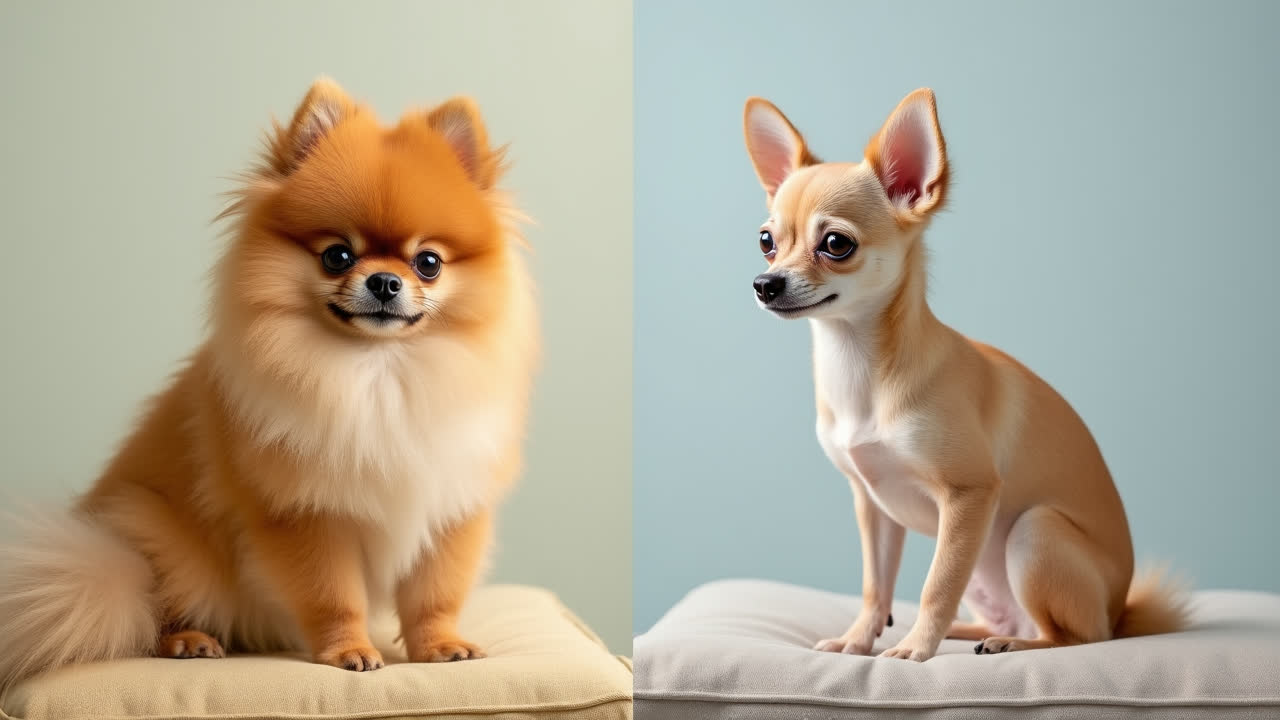
Pomeranians are slightly larger than Chihuahuas, typically standing between 9-11 inches at the withers (shoulder height) and weighing between 1.5-3 kg (3-7 pounds). Their most distinctive feature is undoubtedly their luxurious double coat, consisting of a soft, dense undercoat and a longer, straight outer coat that creates their characteristic fluffy appearance. This abundant fur forms a lion-like mane around their neck and shoulders. Their coat comes in numerous colors including red, orange, cream, black, brown, brindle, and parti-color (two or more colors). Pomeranians have a fox-like facial appearance with a somewhat short muzzle, bright almond-shaped eyes, small erect ears, and an unmistakable tail that curls over their back.
Chihuahuas are even smaller, standing just 6-9 inches at the withers and weighing under 2.5 kg (6 pounds), making them one of the tiniest dog breeds in the world. Some can be as light as 1 kg! Their coat comes in two distinct varieties: the smooth coat (short, glossy, and close to the body) and the long coat (soft, flat or slightly wavy). Unlike Pomeranians, Chihuahuas may or may not have an undercoat regardless of their variety. Their coat colors include black and tan, red, fawn, tricolored, sable, and brindle. Physically, Chihuahuas are known for their distinctive apple-shaped head with a prominently domed skull, large expressive eyes that sometimes appear to bulge slightly, and remarkably large, erect ears in proportion to their tiny head. Their tail is moderately long and carried in a loop over their back.
Both breeds showcase compact bodies with straight limbs, though their overall silhouettes differ dramatically due to coat differences. The Pomeranian presents a more rounded, fluffy appearance while the Chihuahua displays a more angular, refined look with more visible body contours. These physical differences aren't just cosmetic—they influence everything from the breeds' tolerance to different climates to their grooming requirements.
Temperament and Personality: Small Dogs with Big Attitudes
Don't let their size fool you! These tiny companions are known for their outsized personalities and distinctive temperaments. While they share some traits common to toy breeds, there are notable differences in how they interact with their humans and the world around them.
Pomeranians are often described as extroverted, vivacious, and confident little dogs. They typically possess a friendly, outgoing nature combined with the alertness of their spitz ancestors. Intelligent and curious, they love to investigate their surroundings and learn new tricks. Poms are famously energetic and playful despite their small size, often retaining puppy-like enthusiasm well into adulthood. Though generally sociable, they can be somewhat independent and may not be as clingy as some other toy breeds. Their watchdog tendencies mean they're quick to alert you to anything unusual—sometimes a bit too enthusiastically! This makes them excellent alarm systems but can lead to excessive barking if not properly trained.
Chihuahuas, by contrast, tend to form extraordinarily strong bonds with one person, displaying intense loyalty and devotion that borders on possessiveness. They're often described as having terrier-like personalities: feisty, sassy, and bold beyond their tiny stature. Many Chihuahua owners report that their dogs seem convinced they're much larger than they actually are! While they can be sweet and affectionate with their chosen people, Chihuahuas can be more reserved or even suspicious around strangers. Early socialization is absolutely essential to prevent them from becoming overly protective or anxious. Without proper socialization, Chihuahuas may develop "small dog syndrome," displaying undesirable behaviors like excessive barking, nipping, or territorial aggression.
Both breeds bring tremendous personality and charm to their families, but in different ways. Pomeranians tend to spread their affection more evenly among family members and visitors, while Chihuahuas often become intensely devoted to a single person. I've personally found that Pomeranians adapt more readily to new situations and environments, while Chihuahuas sometimes need more time and reassurance during changes. Neither breed is particularly well-suited for households with very young children, as their small size makes them fragile and susceptible to injury during rough play.
Care Requirements: Grooming, Exercise, and Training
Owning any dog comes with responsibilities, and these toy breeds have their own specific needs. Understanding the differences in their care requirements can help you determine which breed might better fit your lifestyle and abilities.
When it comes to grooming, these breeds couldn't be more different. Pomeranians require significant grooming effort due to their dense double coat. Regular brushing (3-4 times weekly) is essential to prevent matting and reduce shedding. They "blow their coat" seasonally, which means intensive shedding periods that require even more attention. Professional grooming every 6-8 weeks is recommended for most Pom owners, which adds to the cost of ownership. Their coat needs can be quite demanding for first-time dog owners or those with limited time for grooming.
Chihuahuas, particularly the smooth-coated variety, are much easier in the grooming department. The smooth coat requires minimal maintenance beyond occasional brushing and regular baths. Long-coated Chihuahuas need somewhat more attention but still much less than Pomeranians. This difference in grooming needs often makes Chihuahuas a more practical choice for busy owners or those who prefer low-maintenance pets. Both breeds benefit from regular nail trimming, dental care, and ear cleaning, though Chihuahuas are particularly prone to dental issues due to their tiny mouths, which may require more diligent oral hygiene.
Despite their small size, both breeds need regular exercise, though their energy levels can differ. Pomeranians, with their working dog ancestry, tend to be more consistently energetic and require daily walks and play sessions to prevent boredom and maintain physical health. Chihuahuas' exercise needs can vary widely between individuals—some are quite energetic while others are more laid-back. Both breeds enjoy and benefit from interactive play, though care must be taken in extreme temperatures due to their small size. Pomeranians, with their thick coats, are generally more cold-tolerant but can overheat quickly in hot weather. Chihuahuas, especially the smooth-coated variety, are often sensitive to cold but handle heat better.
Training presents different challenges for each breed. Pomeranians are generally eager to please and quick to learn, making them relatively easier to train. They often excel in obedience and agility competitions despite their small size. Chihuahuas can be more stubborn and may test boundaries, requiring consistent, patient training approaches. Both breeds can be somewhat difficult to house train, a common challenge with many toy breeds. Early socialization is crucial for both, though perhaps even more so for Chihuahuas to prevent fearfulness or aggression toward strangers and other dogs.
Health Considerations and Lifespan
Small breeds typically enjoy longer lifespans than larger dogs, and both Pomeranians and Chihuahuas are known for their longevity. However, each breed has specific health considerations prospective owners should be aware of before making their choice.
Pomeranians generally live about 12-16 years, with many reaching the upper end of that range when well cared for. Their common health issues include dental problems (due to crowded teeth), patellar luxation (slipping kneecaps), collapsed trachea (which can cause coughing), alopecia X (hair loss condition sometimes called "black skin disease"), and heart conditions like patent ductus arteriosus. They may also suffer from eye problems such as cataracts and progressive retinal atrophy. Their thick coat requires vigilance for skin issues, particularly in hot, humid climates where they can develop hot spots or skin infections if not properly groomed.
Chihuahuas have a similar lifespan of 12-20 years, with many living well into their mid-teens. They're prone to several health issues, including dental disease (extremely common due to their tiny mouths), patellar luxation, heart problems like mitral valve disease, and hydrocephalus (excessive fluid around the brain) related to their large, dome-shaped skulls. Chihuahuas are also susceptible to hypoglycemia (low blood sugar), especially as puppies, which can be life-threatening if not addressed quickly. Another unique characteristic is their molera – a soft spot on the skull similar to a human baby's fontanel – which many Chihuahuas retain throughout life and requires care to prevent injury.
Both breeds can experience obesity if overfed, which exacerbates joint problems and other health issues. Responsible breeding practices are particularly important for these small dogs, as poor breeding can intensify health problems. When considering either breed, it's wise to inquire about health testing and screening practices of the breeder and to review the health histories of the puppy's parents when possible. Regular veterinary check-ups are essential for both breeds, with particular attention to dental care to prevent the tooth loss that commonly affects small dogs as they age.
Pomeranian vs Chihuahua: Side-by-Side Comparison
| Characteristic | Pomeranian | Chihuahua |
|---|---|---|
| Origin | Descended from Arctic sled dogs; developed in Pomerania (Germany/Poland) | Likely native to Mexico; possibly descended from Techichi dogs |
| Size (Height) | 9-11 inches at withers | 6-9 inches at withers |
| Weight | 1.5-3 kg (3-7 pounds) | Less than 2.5 kg (under 6 pounds) |
| Coat Type | Dense double coat with fluffy outer layer | Smooth (short) or longhaired varieties |
| Coat Colors | Red, orange, cream, black, brown, brindle, parti-color | Black and tan, red, fawn, tricolored, sable, brindle |
| Skull Shape | Mildly domed skull with fox-like face | Distinctly apple-shaped head with pronounced dome |
| Ears | Small, erect, proportional to head | Large, erect, wide set |
| Lifespan | 12-16 years | 12-20 years |
| Grooming Needs | High - frequent brushing and professional grooming | Low to moderate depending on coat type |
| Temperament | Alert, friendly, extroverted, curious | Loyal, bold, sometimes territorial |
Which Breed Is Right For You?
Choosing between these charming breeds ultimately comes down to your lifestyle, preferences, and what you're looking for in a canine companion. Both make wonderful pets in the right homes, but considering their differences can help you make the best match.
A Pomeranian might be your ideal match if you: enjoy grooming and don't mind the additional time and expense it requires; want a sociable dog that's friendly with most people; prefer a slightly more independent small dog; have the time and interest for regular training and mental stimulation; can tolerate some barking (though this can be managed with training); and live in a cooler climate or have air conditioning for hot weather.
A Chihuahua might be better suited for you if you: prefer minimal grooming requirements (especially the smooth coat variety); want a deeply devoted companion that bonds intensely with its person; can commit to thorough socialization to prevent fearfulness or aggression; have a quieter household without very young children; live in a warmer climate or can provide appropriate clothing for cold weather; and appreciate a dog with a distinct, sometimes sassy personality.
Neither breed is ideal for families with toddlers or very young children due to their small size and fragility. Both can be injured easily if handled roughly or accidentally stepped on. Additionally, both breeds may not be the best choice for first-time dog owners without the commitment to proper training and socialization, as behavioral issues can develop without appropriate guidance.
Frequently Asked Questions
Are Pomeranians or Chihuahuas better for families with children?
Neither breed is ideal for families with very young children. Both Pomeranians and Chihuahuas are fragile due to their small size and can be easily injured by rough handling or accidental falls. If you have older, gentle children who understand how to properly interact with small dogs, Pomeranians may be slightly more adaptable as family pets since they typically bond with multiple family members rather than just one person. Always supervise interactions between children and small dogs, and teach children appropriate ways to pet and handle these delicate breeds.
Which breed is easier to train, Pomeranians or Chihuahuas?
Pomeranians are generally considered easier to train than Chihuahuas. With their working dog heritage, Pomeranians tend to be eager to please and respond well to positive reinforcement training. They often excel in obedience and even agility competitions. Chihuahuas can be more independent and stubborn, sometimes testing boundaries during training sessions. Both breeds can be challenging to house train, a common issue with toy breeds. Consistency, patience, and positive reinforcement are essential training approaches for both breeds, with early training producing the best results.
Do Pomeranians or Chihuahuas have more health problems?
Both breeds have similar health concerns typical of small dogs, such as dental issues and patellar luxation. Chihuahuas are more prone to skeletal issues related to their apple-shaped head, including hydrocephalus and moleras (soft spots on the skull). They're also highly susceptible to hypoglycemia. Pomeranians more frequently experience coat and skin problems like alopecia X, and they're particularly prone to collapsed trachea. Both breeds can live long, healthy lives with proper veterinary care, appropriate diet, regular exercise, and dental maintenance. Choosing a reputable breeder who conducts health screenings can significantly reduce the risk of hereditary health problems in either breed.
Conclusion: Two Tiny Treasures with Different Traits
Both Pomeranians and Chihuahuas offer the joys of small dog companionship with their own unique characteristics and charm. While they share the benefits of minimal space requirements and lengthy lifespans, they differ significantly in appearance, temperament, and care needs.
Pomeranians bring their fluffy exuberance, sociable nature, and fox-like appearance to the table, though they require more grooming commitment. Chihuahuas offer devoted companionship, distinctive appearance, and minimal grooming needs, particularly in the smooth-coated variety. Both can make wonderful pets when matched with owners who understand and appreciate their specific traits and requirements.
Whichever tiny companion you choose, remember that small size doesn't mean small responsibility. Both breeds deserve the same level of training, socialization, veterinary care, and love as any larger dog. With proper care and attention, either a Pomeranian or a Chihuahua can be a delightful companion for many years to come.