Peonies vs Roses: 5 Key Differences Every Gardener Should Know
Peonies vs Roses: Understanding the Key Differences
Have you ever stood in a garden center, befuddled by the beautiful blooms in front of you, wondering whether you're looking at peonies or roses? Don't worry – you're definitely not alone! As someone who's spent countless hours tending to both in my own garden, I can tell you that distinguishing between these gorgeous flowers is trickier than it seems at first glance.
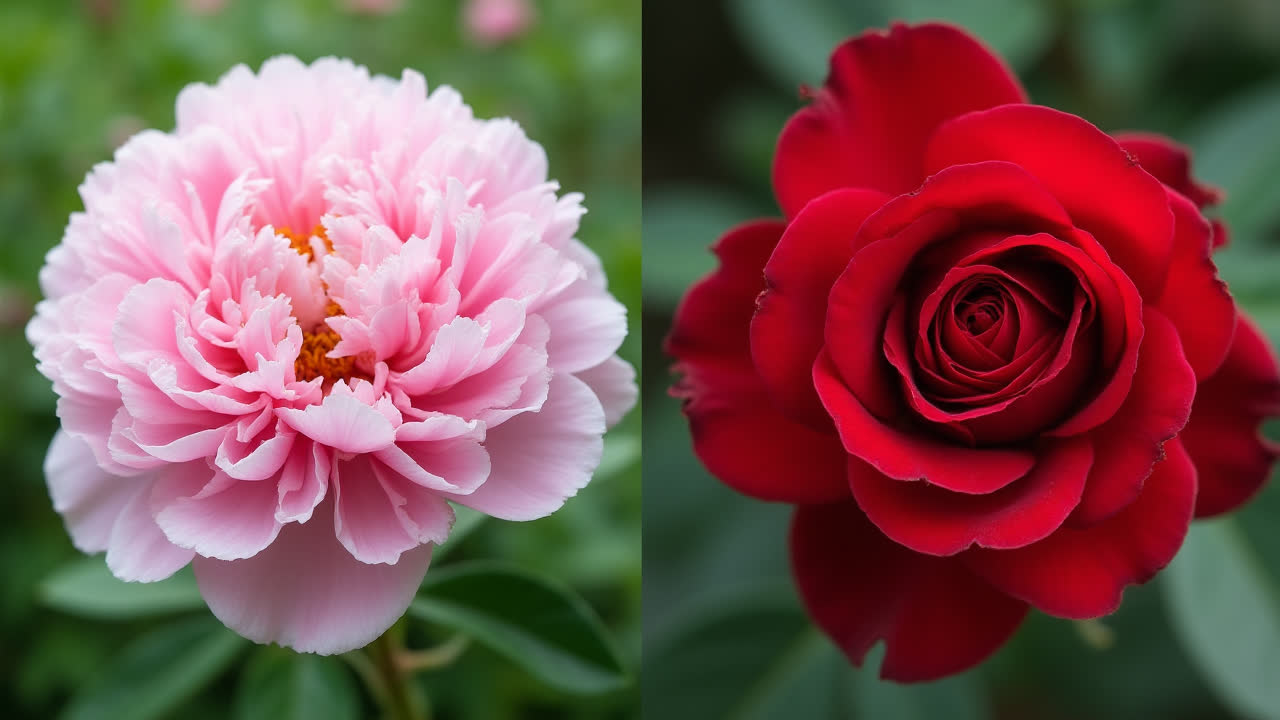
While both peonies and roses share that coveted spot in every gardener's heart with their lush, full blooms, they're surprisingly different flowers once you know what to look for. The primary distinction lies in their petal structure – peonies typically showcase more petals and a considerably fuller look compared to roses.
Understanding Peonies
Let me start with peonies, those glorious spring show-stoppers that make my garden feel like a French countryside scene. These beauties belong to the Paeonia genus, and here's something interesting – they're the only genus in their entire family, Paeoniaceae. It's like they're the lone stars of their botanical family!
When I first started growing peonies, I was amazed to learn they come in two distinct forms. There's the herbaceous type that dies back to the ground each winter and regrows from roots (these are the ones I have mostly), and then there are tree peonies, which grow as permanent shrubs and can reach an impressive 11 feet! I've seen those at botanical gardens, and they're absolutely breathtaking.
One of my favorite things about peonies? Their blooming period feels like a fleeting treasure. Those magnificent flowers typically last only 7 to 10 days, which makes me appreciate every single petal. Last spring, I counted over 50 petals on one of my prize pink blooms – they're just packed with layers upon layers of delicate petals.
Getting to Know Roses
Roses, on the other hand, are like the celebrities of the flower world. These members of the Rosaceae family have been charming us for over 5,000 years. With over 300 different species and tens of thousands of varieties, there's literally a rose for everyone's taste and garden style.
What's fascinating about roses is their simpler petal structure compared to peonies. A classic rose usually sports five petals (though I've seen some varieties with just four), and while they're beautiful, they don't have that impossibly full, ruffled appearance that makes peonies so distinctive.
And here's something that many beginners don't realize – those sharp things on rose stems aren't actually thorns! They're prickles that grow from the outer layer of the stem. I learned this the hard way after years of calling them the wrong thing. These little curved hooks help roses climb and anchor themselves, which explains why I've seen wild roses sprawling up trees and fences.
Side-by-Side Comparison: Peonies vs Roses
| Feature | Peonies | Roses |
|---|---|---|
| Botanical Family | Paeoniaceae (genus Paeonia) | Rosaceae (genus Rosa) |
| Petal Count | Many, often 30-50+ petals | Usually 5 petals (some varieties more) |
| Bloom Duration | 7-10 days | Longer, varies by variety |
| Growth Type | Herbaceous perennials or shrubs | Shrubs or climbing plants |
| Stems | Smooth, no prickles | Have prickles (thorns) |
| Blooming Season | Late spring to early summer | Various seasons depending on type |
| Fragrance | Sweet, light scent | Classic floral, often stronger |
| Care Level | Low-maintenance once established | Requires regular pruning and care |
Personal Experiences: Growing Both Flowers
After growing both flowers for years, I've noticed some quirks that the gardening books don't always mention. Peonies, for instance, are incredibly long-lived – I have plants that are older than my teenage kids! They're like the family heirlooms of the plant world. Once established, they're surprisingly low-maintenance, though they do need support when those heavy blooms appear.
Roses, though? They're more like high-maintenance friends who need constant attention but reward you with their presence throughout the growing season. I spend way more time pruning, feeding, and watching for black spot on my roses than I ever do with my peonies.
Here's a little secret: when I'm arranging flowers for my dining table, I often combine roses and peonies when their seasons overlap. The contrast between the simpler rose forms and the full, ruffled peonies creates stunning arrangements that always get compliments from dinner guests.
Frequently Asked Questions
Which flower blooms longer: peonies or roses?
Roses definitely have the advantage here. While individual peony blooms only last 7-10 days, most roses can bloom for weeks, and many varieties even provide multiple flushes throughout the growing season. I've had rose plants bloom from early summer right through fall, while my peonies put on their show and then call it quits for the year.
Can peonies and roses grow in the same garden?
Absolutely! I have both in my garden, and they complement each other beautifully. Peonies bloom in late spring to early summer, while many roses continue blooming into fall. Just make sure to give them enough space – peonies can spread quite wide, and roses need good air circulation to prevent diseases. I keep mine about 3-4 feet apart to avoid any competition.
Are peonies easier to grow than roses?
In my experience, yes! Once peonies are established (which takes about 2-3 years), they're remarkably low-maintenance. They're extremely hardy, don't need much fertilizer, and can live for decades without much fuss. Roses, however, require regular pruning, feeding, and often more attention to disease prevention. If you're a beginning gardener, I'd recommend starting with peonies.
Final Thoughts
Whether you're drawn to the lush abundance of peonies or the classic elegance of roses, both flowers deserve a spot in any garden lover's heart. I've learned that the joy isn't in choosing between them – it's in understanding and appreciating what makes each unique.
Next time you're in your garden center, take a closer look at these beauties. Feel the smooth stems of the peonies versus the prickly rose stems. Count those petals. Notice the difference in leaf shapes. Soon enough, you'll be spotting the differences from across the garden, and who knows? You might just end up bringing both home like I did years ago.
Happy gardening, flower friends!