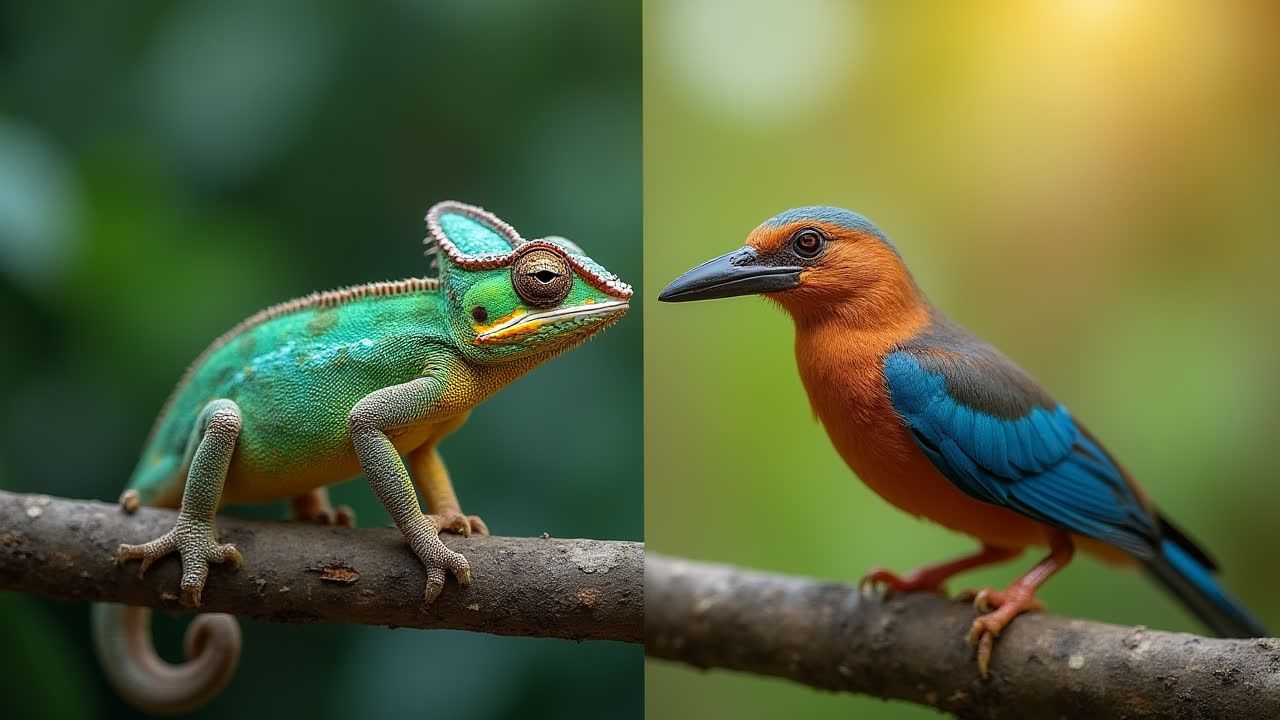
Parallel vs Convergent Evolution: Key Differences Explained
When exploring the fascinating world of evolutionary biology, two patterns often cause confusion: parallel evolution and convergent evolution. Though they may appear similar at first glance, these evolutionary processes represent distinct paths through which species adapt to their environments. Have you ever wondered why certain organisms separated by oceans develop strikingly similar characteristics? Or how completely unrelated species can evolve nearly identical features?
The natural world offers countless examples of species that share remarkable similarities despite having different ancestral origins. From the streamlined bodies of sharks and dolphins to the spiny adaptations of cacti and euphorbias, these resemblances aren't coincidental—they're the product of specific evolutionary mechanisms at work. Understanding the subtle distinctions between parallel and convergent evolution helps us appreciate the incredible ways in which life responds to environmental pressures.
Both parallel and convergent evolution demonstrate how natural selection works as a powerful force shaping organisms over time. While divergent evolution (where species develop unique traits from a common ancestor) drives biodiversity, parallel and convergent evolution showcase how similar environmental conditions can create comparable adaptations across different evolutionary lineages. These patterns reveal nature's remarkable ability to arrive at similar solutions when faced with comparable challenges.
Understanding Parallel Evolution
Parallel evolution occurs when distantly related organisms develop similar traits independently while evolving in separate but equivalent habitats. This fascinating process happens when species that share a distant common ancestor face similar environmental pressures in geographically isolated locations. The key distinction is that these species already possessed certain genetic similarities from their shared ancestry, which then evolved along similar trajectories despite being separated.
A classic example of parallel evolution can be observed in the comparison between marsupial mammals in Australia and placental mammals elsewhere in the world. Despite being separated by vast oceans and evolving independently for millions of years, these groups developed remarkably similar body forms and ecological niches. The marsupial wolf (thylacine) and the placental wolf shared striking physical resemblances despite their distant relationship—both evolved powerful jaws, similar hunting strategies, and comparable social structures. This occurred because they occupied equivalent ecological roles in their respective environments, facing similar selective pressures that shaped their evolution along parallel paths.
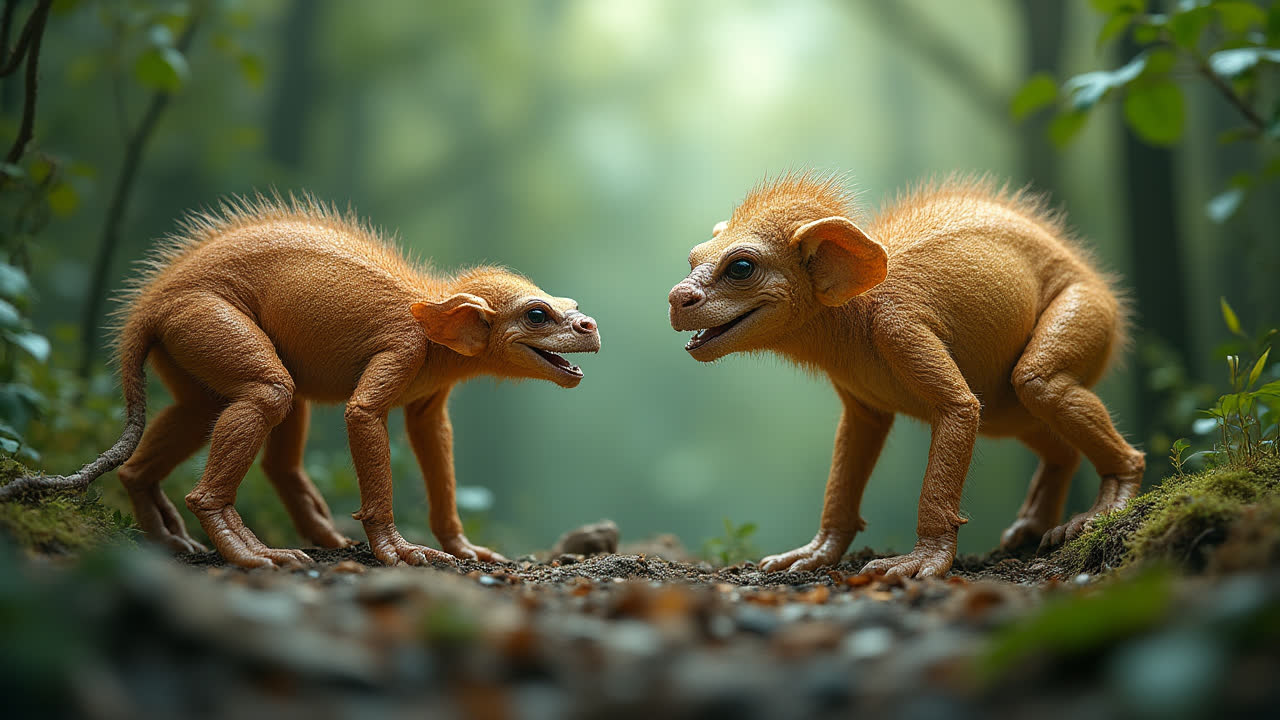
Another compelling example involves the independent evolution of old world monkeys in Africa and Asia and new world monkeys in South America. After continental drift separated these primate groups millions of years ago, they continued evolving similar adaptations for tree-dwelling lifestyles. Both groups independently developed prehensile appendages, specialized vision systems, and similar dietary adaptations. Despite evolving on different continents, they maintained a comparable level of similarity because they faced equivalent ecological challenges in similar forest habitats. What makes parallel evolution distinct is that it preserves the initial level of resemblance between the diverging groups, with similar changes occurring along both evolutionary paths.
When we examine parallel evolution more closely, we can identify certain characteristics that define this pattern. First, the species involved typically share a more recent common ancestor compared to cases of convergent evolution. Second, the environments exerting selective pressure must be equivalent but geographically separated. Third, the resulting similarities extend beyond superficial resemblances to include deeper structural, behavioral, or physiological traits. These factors combine to create evolutionary paths that run parallel to each other, maintaining similar levels of resemblance while developing independently.
Exploring Convergent Evolution
Convergent evolution presents a fascinating contrast to parallel evolution. In this evolutionary pattern, unrelated species develop analogous structures or traits when adapting to similar environmental challenges. Unlike parallel evolution, which occurs in species with a distant common ancestor, convergent evolution typically involves organisms with very different ancestral backgrounds that have independently evolved similar features as adaptations to comparable environmental pressures. The key characteristic of convergent evolution is the development of analogous traits—structures that serve similar functions but evolved from different ancestral structures.
One of the most striking examples of convergent evolution can be seen in the comparison between North American cacti (family Cactaceae) and African euphorbias (family Euphorbiaceae). Despite belonging to entirely different plant families with distinct evolutionary histories, both groups have independently evolved thick, water-storing stems, reduced leaves, and spiny projections. These similarities arose as adaptations to similar arid environments, where water conservation is essential for survival. The remarkable resemblance between these plant groups demonstrates how similar ecological challenges can drive unrelated organisms toward comparable solutions.
The evolution of flight provides another compelling example of convergent evolution. Birds, bats, and insects have all independently evolved wings that enable aerial locomotion, despite having vastly different ancestral structures. Bird wings developed from forelimbs with scales, bat wings from mammalian limbs with hair, and insect wings from entirely different body wall extensions. Though these wings share the same function, their underlying anatomical structures reveal their distinct evolutionary origins. This illustrates a fundamental aspect of convergent evolution—analogous structures may appear similar in function, but their developmental pathways and internal organization reveal their independent origins.
The development of complex camera-type eyes across different animal phyla represents one of the most remarkable examples of convergent evolution. Vertebrates, cephalopods (like octopuses and squids), and certain cnidarians have all independently evolved sophisticated eyes with lenses, retinas, and iris-like structures. Despite having evolved from completely different ancestral tissues and through distinct developmental pathways, these eyes perform remarkably similar functions. The convergent evolution of eyes demonstrates how specific environmental challenges—in this case, the advantage of visual perception—can drive unrelated organisms toward functionally similar solutions.
Comparing Parallel and Convergent Evolution
| Feature | Parallel Evolution | Convergent Evolution |
|---|---|---|
| Definition | Independent evolution of similar traits in different but equivalent habitats by species with distant common ancestry | Independent evolution of analogous structures in unrelated species adapting to similar environmental pressures |
| Ancestral Relationship | Species share a distant common ancestor | Species are typically unrelated or very distantly related |
| Habitat Type | Occurs in different but equivalent habitats that are geographically separated | Occurs within similar habitats regardless of geographic location |
| Resulting Traits | Similar structures that maintain the same level of resemblance | Analogous structures that may appear similar but have different anatomical origins |
| Genetic Basis | Often involves similar genetic pathways due to shared ancestry | Typically involves different genetic pathways achieving similar results |
| Key Examples | Marsupial mammals vs. placental mammals; Old World vs. New World monkeys | Cactus vs. euphorbia plants; wings in birds, bats, and insects; camera eyes in vertebrates and cephalopods |
| Evolutionary Significance | Demonstrates how similar selective pressures act on related genetic backgrounds | Demonstrates the power of natural selection to produce similar solutions from different starting points |
| Speciation Outcome | Does not lead to speciation | Does not lead to speciation |
Key Similarities Between Parallel and Convergent Evolution
While parallel and convergent evolution represent distinct evolutionary patterns, they share several important commonalities that highlight the fundamental principles of natural selection. Both patterns demonstrate how similar environmental pressures can shape the development of comparable adaptations across different species. Understanding these similarities helps illuminate the broader patterns of evolutionary biology and the remarkable ways in which organisms adapt to their environments.
First and foremost, both parallel and convergent evolution involve the independent development of similar traits in different species. Neither pattern represents a case of direct inheritance from a common ancestor with the trait already present. Instead, both involve separate evolutionary journeys that arrive at comparable destinations. This independent development underscores the power of natural selection to shape organisms in response to environmental challenges, regardless of their ancestral starting points.
Both evolutionary patterns occur under the influence of similar environmental pressures. Whether it's the arid conditions driving succulent adaptations in plants or the advantages of flight leading to wing development in different animal groups, these patterns demonstrate how specific ecological challenges can drive adaptation along predictable paths. The similarities that emerge are not coincidental but rather represent optimal solutions to particular environmental problems.
Another shared characteristic is that neither parallel nor convergent evolution leads to speciation on its own. Unlike divergent evolution, which contributes to the formation of new species, parallel and convergent evolution represent adaptive responses to environmental conditions that don't necessarily create reproductive barriers between populations. They're patterns of trait evolution rather than mechanisms of species formation.
Evolutionary Significance and Modern Research
The study of parallel and convergent evolution offers valuable insights into the predictability and constraints of evolutionary processes. By examining how similar traits evolve independently in different lineages, researchers can better understand the rules that govern biological adaptation and the extent to which evolution is repeatable under similar conditions. These evolutionary patterns have significant implications for our understanding of biodiversity, ecological adaptation, and the fundamental principles that drive biological change over time.
Modern molecular and genetic research has revealed fascinating details about the mechanisms underlying both parallel and convergent evolution. In some cases of parallel evolution, scientists have discovered that similar genetic changes occur in related species adapting to similar environments—suggesting that shared genetic architecture can channel evolution along particular paths. For example, studies of cichlid fishes in crater lakes have shown that the same genetic pathways are often involved when these related fish species independently adapt to similar ecological niches in different lakes.
Convergent evolution offers particularly compelling evidence for the power of natural selection. When completely unrelated organisms evolve similar solutions to comparable challenges, it demonstrates that certain adaptations represent optimal responses to specific environmental pressures. Recent research has shown that convergent phenotypes can sometimes arise through different genetic pathways—highlighting the remarkable flexibility of evolutionary processes. In other cases, scientists have been surprised to discover that the same genetic changes can underlie convergent traits in distantly related species, suggesting that there may be limited genetic solutions to certain adaptive challenges.
The study of these evolutionary patterns has practical applications across multiple fields. In medical research, understanding convergent evolution helps scientists identify critical functional regions in proteins that have been conserved across diverse species. In agriculture, insights from parallel and convergent evolution guide breeding programs aimed at developing crops with specific adaptive traits. And in conservation biology, knowledge of how species adapt to changing environments through these evolutionary processes informs strategies for protecting biodiversity in the face of environmental change.
Frequently Asked Questions About Parallel and Convergent Evolution
What's the simplest way to distinguish between parallel and convergent evolution?
The simplest distinction is that parallel evolution occurs between species that already share some similarities due to common ancestry, whereas convergent evolution happens between unrelated species. In parallel evolution, related species evolve along similar paths in separate but equivalent environments, maintaining their level of resemblance. In convergent evolution, unrelated species develop analogous structures that serve similar functions but evolved from different ancestral structures. Think of parallel evolution as species on parallel tracks, while convergent evolution involves species from different starting points converging on similar solutions.
Can parallel evolution eventually lead to convergent evolution?
Yes, the boundaries between parallel and convergent evolution can sometimes blur over very long evolutionary timescales. If two lineages that initially underwent parallel evolution continue to adapt to similar environments over millions of years, their genetic differences may accumulate to the point where they would be considered unrelated from a functional perspective. In such cases, what began as parallel evolution might eventually be classified as convergent evolution. The distinction often depends on the time scale and level of genetic relationship being considered by researchers.
How do scientists determine whether similar traits resulted from parallel or convergent evolution?
Scientists use multiple lines of evidence to distinguish between parallel and convergent evolution. First, they construct detailed phylogenetic trees using genetic data to establish the evolutionary relationships between species. Then, they examine the developmental pathways and genetic mechanisms underlying the similar traits. In parallel evolution, the genetic and developmental mechanisms are typically similar due to shared ancestry. In convergent evolution, the underlying genetic pathways and developmental processes are usually different, despite producing functionally similar outcomes. Advanced techniques like comparative genomics and developmental biology help scientists trace the evolutionary origins of traits and determine whether similarities arose from shared ancestry or independent adaptation.
Conclusion
The distinction between parallel and convergent evolution highlights the fascinating ways in which life responds to environmental challenges. While parallel evolution demonstrates how related species can independently develop similar traits in equivalent habitats, convergent evolution shows how unrelated organisms can arrive at comparable solutions when faced with similar selective pressures. Both patterns underscore the remarkable adaptability of life and the powerful influence of natural selection in shaping biological diversity.
Understanding these evolutionary patterns enhances our appreciation of the complex processes that have shaped the incredible diversity of life on Earth. From the marsupial mammals of Australia to the camera eyes of octopuses, these examples of parallel and convergent evolution reveal the elegant efficiency of natural selection as it shapes organisms to thrive in their respective environments. As research continues to uncover the genetic and developmental mechanisms underlying these patterns, our understanding of evolutionary biology grows ever deeper, offering insights into both the history of life and its potential future trajectories in changing environments.