Infrared vs Induction Cooker: Which Is Better For Modern Cooking?
Understanding the Basic Differences
The kitchen technology landscape has changed dramatically in recent years. Gone are the days when gas stoves were the only professional-grade option for serious home cooks. Today's modern kitchen offers incredible alternatives that are safer, more efficient, and often produce better cooking results.
When comparing infrared and induction cooking technologies, we're looking at two fundamentally different approaches to creating heat. The primary distinction lies in how heat is generated and transferred to your cookware. While both are electric cookers that eliminate the naked flame of gas cooking, they operate on entirely different physical principles.
Have you ever wondered why professional chefs are increasingly switching to these technologies? It's not just about energy efficiency (though that's a significant factor) - it's also about precision, safety, and cooking performance. In my kitchen, I've found that each technology has its sweet spot for different cooking techniques.
Before we dive into the detailed comparison, it's worth noting that your existing cookware collection might influence your decision significantly. One technology is far more restrictive in terms of compatible pots and pans, which could mean additional expenses if you need to replace your favorite cooking vessels.
What Is an Induction Cooker?
An induction cooker represents a revolutionary approach to cooking that doesn't rely on traditional heat transfer methods. Unlike conventional cookers that heat a burner or produce a flame, induction cookers use electromagnetic fields to transfer energy directly to your cookware. When I first switched to induction cooking, the speed difference was immediately noticeable - water boils in nearly half the time compared to my old gas stove!
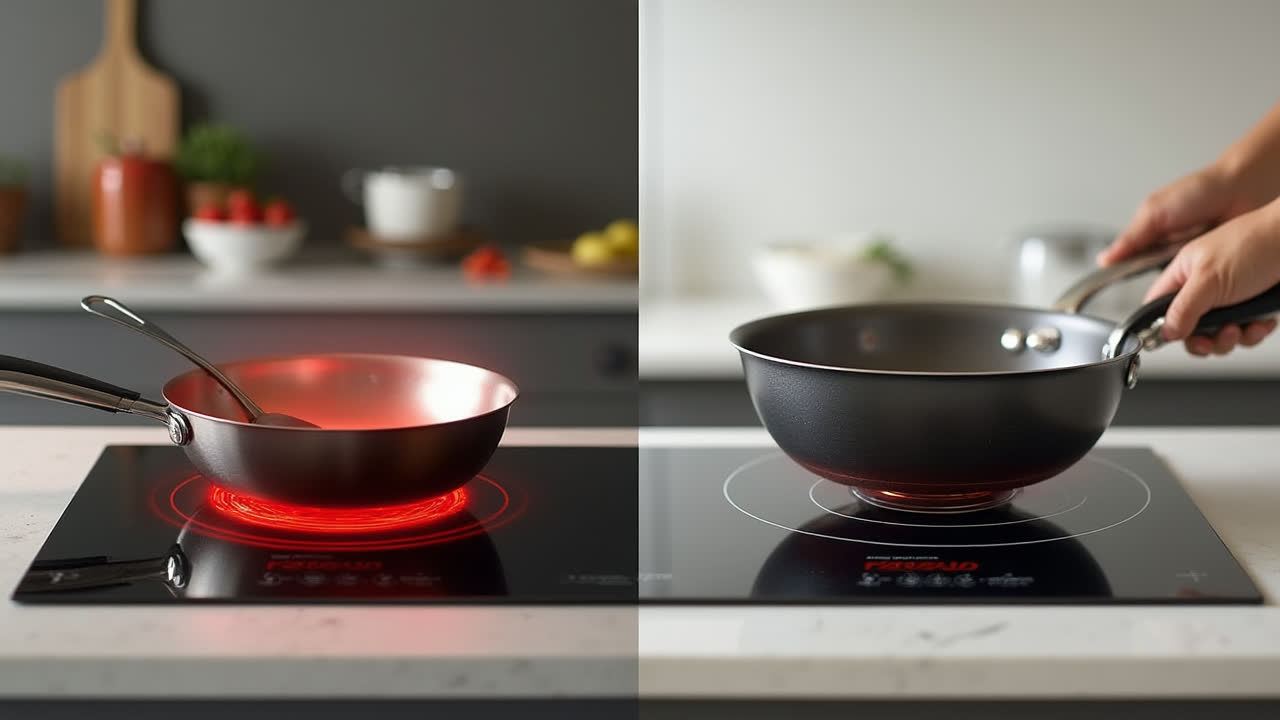
The science behind induction cooking is fascinating. Beneath the glass surface sits a copper coil through which an alternating electric current flows. This creates a fluctuating magnetic field that generates what are called "eddy currents" within ferromagnetic cookware placed on the surface. These currents cause the molecules in your pot or pan to vibrate rapidly, creating heat through friction. The cookware itself becomes the heat source, rather than receiving heat from an external element.
One aspect of induction cooking that took me by surprise was the immediate response to temperature adjustments. When you change settings on an induction cooker, the temperature changes almost instantly - much like gas but without the flame. This gives you remarkable precision for delicate cooking tasks. I've found this particularly useful when making temperature-sensitive foods like caramel or melting chocolate, where precise control prevents burning.
The major limitation of induction cooking is cookware compatibility. Your pots and pans must contain ferromagnetic materials like iron or steel. A simple test: if a magnet sticks firmly to the bottom of your cookware, it will work on an induction cooktop. When I made the switch, I had to replace some of my aluminum and copper pans, though many manufacturers now produce "induction-ready" versions of traditionally non-compatible materials.
What Is an Infrared Cooker?
Infrared cookers operate on a completely different principle than induction models. These electric cookers use infrared radiation - the same type of electromagnetic energy that makes you feel warm in sunlight. Within an infrared cooker, electric current heats internal resistor coils, producing infrared radiation that transfers heat to your cooking vessels. One thing I immediately noticed when using an infrared cooker was the distinctive red glow - unlike induction cookers which remain visually unchanged during operation.
The heating mechanism of infrared cookers involves halogen lamps and radiant coils that work together to generate focused heat. This radiation passes through the cooker's surface and directly heats both the cookware and the food inside. The first time I used an infrared cooker for stir-frying, I was impressed by how the heat seemed to penetrate deeper into the food compared to my previous cooking methods.
One significant advantage of infrared cooking is its versatility with cookware. Unlike induction cookers with their strict ferromagnetic requirements, infrared cookers work with virtually any type of cooking vessel - ceramic, aluminum, glass, or steel. This flexibility has saved me from having to replace beloved pans that have been in my kitchen for years. Additionally, infrared cookers can even function as makeshift ovens for baking in a pinch, something I've utilized when preparing small batches of cookies without wanting to heat my entire oven.
While infrared cookers are more energy-efficient than traditional electric burners, they don't quite match the efficiency of induction technology. In my experience, they tend to heat more slowly than induction cookers, but they distribute heat more evenly throughout the cooking vessel. This makes them particularly good for dishes that require consistent, even heat distribution, such as delicate sauces or slow-cooked stews.
Detailed Comparison: Infrared vs Induction Cooker
| Feature | Infrared Cooker | Induction Cooker |
|---|---|---|
| Operating Principle | Uses infrared heat radiation | Uses electromagnetic induction |
| Heating Mechanism | Halogen lamps and radiant coils transfer heat via radiation | Electromagnetic field creates heat directly in the cookware |
| Heating Speed | Moderately fast | Very fast (up to 50% faster than gas) |
| Heat Distribution | Even throughout the cooking vessel | Concentrated at the bottom of the vessel |
| Cookware Compatibility | Works with all types (ceramic, aluminum, steel, etc.) | Only works with ferromagnetic materials (steel, cast iron) |
| Energy Efficiency | More efficient than traditional but less than induction | Highest energy efficiency (up to 90%) |
| Visual Indication | Glows red when operating | No visual indication of heat |
| Versatility | Can be used for baking and various cooking methods | Limited to cooking methods requiring pots and pans |
After using both technologies in my home kitchen, I've found that each has its strengths. Induction excels at quick, high-heat cooking tasks like boiling water or searing meat, while infrared provides more consistent heat for long-cooking dishes. Sometimes I wish I could have the best of both worlds!
Practical Considerations for Home Cooks
When choosing between these cooker types, several practical factors beyond the technical differences should influence your decision. Budget considerations often come into play - generally, induction cookers tend to be more expensive upfront than comparable infrared models. However, the energy savings from induction cooking can offset this difference over time. In my household, our energy bill noticeably decreased after switching to induction for most of our cooking.
Kitchen space and installation requirements are another important consideration. Both technologies typically require similar counter space, but induction cookers often need special electrical circuitry due to their higher power demands. When I installed my induction cooktop, I needed to upgrade my kitchen's electrical system - an additional expense I hadn't initially factored in. Infrared cookers typically work with standard electrical connections, making them sometimes easier to integrate into existing kitchens.
Safety features vary between the two technologies, though both are generally safer than gas cooking. Induction cookers only heat ferromagnetic materials, meaning the surface itself stays relatively cool except for residual heat transferred from your cookware. I've found this especially valuable in my home with curious children, as there's much less risk of accidental burns. Infrared cookers, while safer than traditional electric coils, do generate surface heat that can cause burns if touched during or shortly after cooking.
Cleaning and maintenance requirements differ significantly between these cooker types. The smooth glass surfaces of both are easier to clean than traditional gas burners or electric coils, but induction cooktops are particularly simple to maintain since food rarely burns onto the surface (because the surface itself doesn't get hot enough to burn spills). After years of scrubbing burnt-on food from my old cooktop, the easy maintenance of my induction cooker has been a welcome change to my cleaning routine.
Environmental and Energy Efficiency Aspects
In today's environmentally conscious world, the energy efficiency of kitchen appliances should be a key consideration. Induction cookers are the clear winners in this category, with energy efficiency ratings of up to 90% - meaning 90% of the energy consumed is converted directly to heat in your cookware. Compare this to gas cookers, which typically operate at around 40% efficiency, and you can see why environmentally conscious cooks are making the switch. My own electricity usage for cooking dropped by approximately 30% after switching to induction.
Infrared cookers, while more efficient than traditional electric or gas cookers, don't quite match induction technology's impressive efficiency. They typically operate at around 60-70% efficiency. However, their ability to work with any cookware might actually have environmental benefits if it means you don't need to replace perfectly good pots and pans, reducing waste and resource consumption.
The carbon footprint comparison depends largely on your local energy sources. Both cooker types use electricity, so their environmental impact is directly tied to how your electricity is generated. In regions with a high percentage of renewable energy in the grid mix, both options become significantly greener. When I moved to an area powered predominantly by hydroelectricity, the environmental case for electric cooking became even stronger for my household.
Long-term sustainability considerations might also include product lifespan and repairability. Both technologies typically use solid-state electronics, meaning fewer mechanical parts to wear out compared to gas systems. In my experience, modern infrared and induction cookers tend to have similar lifespans of 10-15 years with proper care. However, specialized components can make repairs more complex and potentially more expensive than traditional cookers when problems do occur.
Frequently Asked Questions
Can I use my existing cookware with both types of cookers?
It depends on your cookware material. With infrared cookers, you can use virtually any type of cooking vessel - ceramic, aluminum, stainless steel, cast iron, or glass. Induction cookers are more restrictive, requiring cookware with ferromagnetic properties (containing iron). To test if your cookware will work with an induction cooker, try sticking a magnet to the bottom - if it sticks strongly, the cookware should work. Many modern cookware pieces now come labeled as "induction compatible."
Which cooker type is better for professional-level cooking?
Both technologies have found their way into professional kitchens, but for different applications. Induction cookers are preferred by many professional chefs for their rapid response to temperature changes and precise control, similar to gas but cleaner and more efficient. They excel at high-heat techniques like searing and rapid boiling. Infrared cookers are often chosen for their even heat distribution, making them ideal for delicate sauces and temperature-sensitive cooking. The best choice depends on your specific cooking style and techniques.
Are infrared and induction cookers safe for everyday use?
Yes, both types are considered safer than traditional gas or electric cookers. Induction cookers have a significant safety advantage because the surface itself doesn't get hot - only the pan does. This greatly reduces burn risks and fire hazards. If you accidentally turn on an induction cooker without a pan, it won't heat up. Infrared cookers do get hot, similar to other electric cooktops, but many models include safety features like automatic shut-off when no cookware is detected or after a certain time period. Both types eliminate open flames and gas leakage concerns.
Making Your Final Decision
Choosing between infrared and induction cooking technologies ultimately comes down to your specific cooking habits, existing cookware collection, and personal preferences. After using both types extensively, I've found that induction offers unmatched speed and efficiency, while infrared provides greater versatility with cookware and more even heat distribution.
If energy efficiency and cooking speed are your top priorities, an induction cooker is likely your best choice - especially if you're willing to invest in compatible cookware if needed. On the other hand, if you have a beloved collection of mixed-material cookware and prefer even heat distribution, an infrared cooker might be more suitable for your kitchen.
Whichever technology you choose, you'll be making a significant upgrade from traditional cooking methods in terms of efficiency, safety, and performance. Both infrared and induction represent the cutting edge of home cooking technology, bringing professional-grade results within reach of home chefs everywhere.