Hypocotyl vs Epicotyl: Understanding the Key Differences and Functions
When a seed germinates, it undergoes fascinating transformations as it develops into a seedling. Two crucial structures emerge during this process: the hypocotyl and the epicotyl. While both are essential components of the embryonic axis in developing plants, they serve different functions and can help us distinguish between different types of germination. Have you ever wondered why some seedlings push their seed leaves above the soil while others keep them buried? The answer lies in understanding these two important plant structures.
As an avid gardener, I've always been fascinated by the miracle of germination. There's something magical about placing a tiny seed in soil and watching it transform into a thriving plant. Over the years, I've observed countless seeds sprouting, and the differences in how they emerge from the soil led me to explore the science behind these processes. The distinction between hypocotyl and epicotyl development isn't just botanical trivia—it has practical implications for anyone growing plants from seed.
What is a Hypocotyl?
The hypocotyl is the portion of a seedling stem that appears between the cotyledons (seed leaves) and the radicle (embryonic root). Think of it as the bridge connecting the future root system to the seed leaves. When a seed first germinates, the radicle typically emerges first, anchoring the developing seedling in the soil. The hypocotyl follows, and in many plant species, it's responsible for the distinctive "hook" shape you might observe in newly emerging seedlings.
I remember the first time I grew sunflowers with my niece. We planted the seeds and eagerly checked them daily. When the seedlings finally pushed through the soil surface, they formed perfect little arches—these were the hypocotyls elongating and pushing upward, pulling the cotyledons along with them. The hypocotyl serves as the main elongation part of the young plant and eventually develops into the first section of the stem. Its growth is stimulated by light, and the rate of this growth is determined through a process called photomorphogenesis—essentially, how the plant develops in response to light.
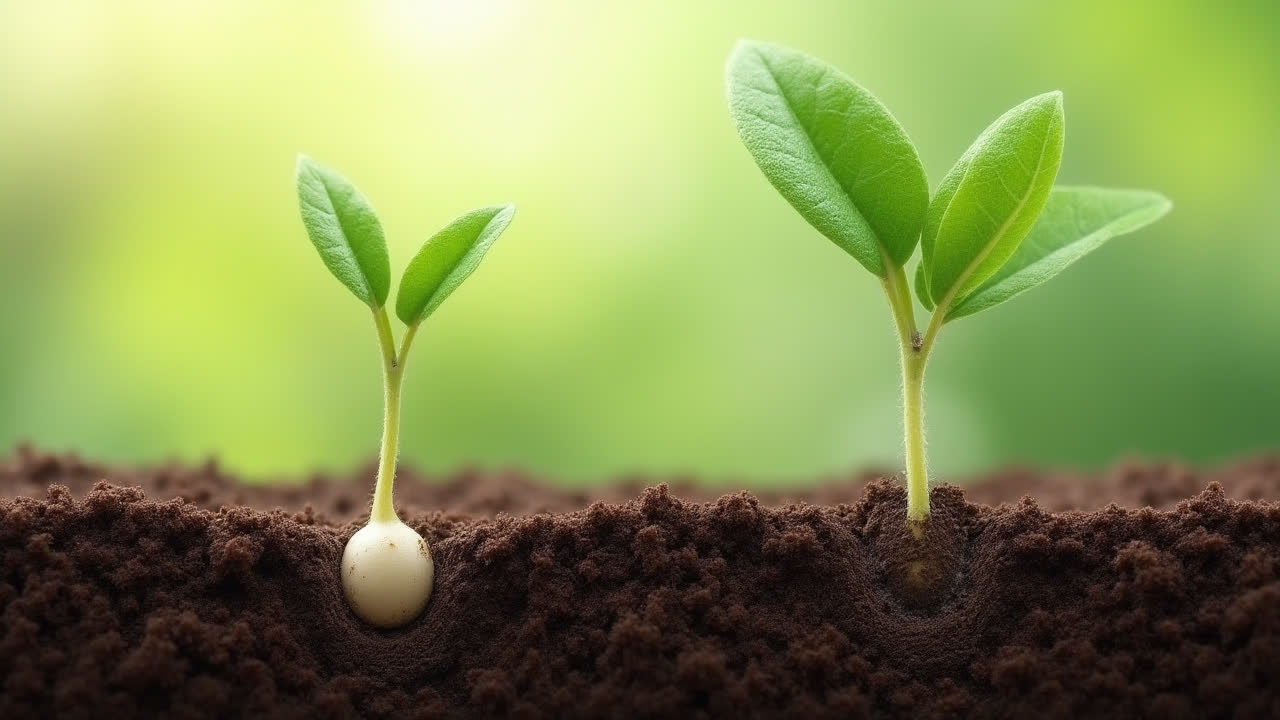
In epigeal germination (a term derived from Greek meaning "above the earth"), the hypocotyl elongates significantly, lifting the cotyledons above the soil surface. This type of germination is common in plants like beans, sunflowers, and many vegetables. The elongation of the hypocotyl creates that characteristic seedling loop we often see breaking through the soil. Interestingly, in some plant species like Gloxinia and Cyclamen, the hypocotyl can swell and function as a storage organ for food reserves, demonstrating the versatility of this structure across different plant families.
What is an Epicotyl?
The epicotyl, in contrast, is the portion of the seedling stem located between the cotyledonary node (where the seed leaves are attached) and the plumule (the embryonic shoot that will develop into the true leaves and stem). While the hypocotyl connects the root to the cotyledons, the epicotyl connects the cotyledons to the first true leaves of the plant. You might think of it as the upper segment of the embryonic axis that will eventually form the main shoot system of the mature plant.
Last spring, I planted some peas in my garden and noticed something interesting: unlike the sunflowers, the pea seeds stayed buried in the soil, but the seedlings still emerged. This was hypogeal germination (meaning "below the earth") in action—where the cotyledons remain underground while the epicotyl elongates and pushes upward. The epicotyl's growth is what allows the embryonic shoot to emerge from the soil in these cases. Many larger seeds like peas, corn, and oak trees demonstrate this pattern of germination, keeping their energy-rich cotyledons safely below ground while sending their epicotyls toward the light.
In some plants, particularly in gymnosperms like pine trees, specialized protective structures develop around these embryonic parts. The coleorhiza forms a protective covering for the developing root, while the coleoptile serves as a sheath protecting the emerging leaves. These adaptations highlight the remarkable specialization that has evolved to protect vulnerable seedling tissues as they transition from seed to independent plant. The epicotyl eventually develops into the upper portion of the stem system, bearing leaves, flowers, and fruits as the plant matures.
The Role of Hypocotyl and Epicotyl in Different Types of Germination
The relationship between the hypocotyl and epicotyl plays a crucial role in determining the type of germination a plant exhibits. This distinction isn't merely academic—it reflects different evolutionary strategies for seedling survival. In epigeal germination, the rapid elongation of the hypocotyl pulls the cotyledons above ground, where they often turn green and photosynthesize, providing additional energy for the developing seedling. Common examples include beans, cucumbers, and sunflowers. I've found that seedlings with this germination pattern often establish themselves quickly, converting their cotyledons into temporary photosynthetic organs that supplement the stored food reserves in the seed.
In hypogeal germination, the hypocotyl remains short while the epicotyl extends significantly, pushing the plumule (but not the cotyledons) above ground. The cotyledons remain below the soil surface, where they transfer their stored nutrients to the growing seedling but don't photosynthesize. Peas, corn, and oak trees are classic examples of plants that show hypogeal germination. This strategy offers certain advantages—the nutrient-rich cotyledons are protected from surface predators and environmental stresses, providing a more secure food reserve for the developing plant.
Different plant families have evolved preferences for one germination strategy over the other based on their ecological niches and evolutionary history. In my garden experiments, I've noticed that plants with hypogeal germination often have larger seeds with more substantial food reserves, which makes sense given that their cotyledons won't be able to supplement energy through photosynthesis. These different germination strategies represent fascinating adaptations to various environmental challenges faced by emerging seedlings. Understanding whether a plant shows epigeal or hypogeal germination can be valuable information for gardeners and farmers, as it affects planting depth and early seedling care.
Comparison Table: Hypocotyl vs Epicotyl
| Feature | Hypocotyl | Epicotyl |
|---|---|---|
| Definition | Portion of seedling stem between radicle and cotyledons | Portion of seedling stem between cotyledons and plumule |
| Position | Below the cotyledonary node | Above the cotyledonary node |
| Starting point | Begins at the radicle | Begins at the cotyledonary node |
| Termination point | Ends at the cotyledonary node | Ends at the plumule (embryonic shoot) |
| Role in germination | Elongates in epigeal germination to bring cotyledons above soil | Elongates in hypogeal germination while cotyledons remain in soil |
| Develops into | Lower portion of the stem near the root | Upper portion of the stem bearing leaves, flowers, and fruits |
| Growth stimulation | Primarily stimulated by light through photomorphogenesis | Stimulated by both light and hormonal factors |
| Examples of plants | Extended in bean, sunflower, and most dicot seedlings | Extended in pea, corn, oak, and many monocot seedlings |
Developmental Significance of Hypocotyl and Epicotyl
Beyond their immediate roles in germination, both the hypocotyl and epicotyl harbor critical developmental significance for the entire plant. The tissues within these structures contain meristematic cells—essentially plant stem cells—that will divide and differentiate to form the mature plant body. The vascular tissues that transport water, nutrients, and photosynthates throughout the plant begin their organization in these embryonic structures, establishing the continuity of the vascular system from roots to shoots.
One fascinating aspect I've observed in my years of gardening is how the growth patterns of these structures can be affected by environmental conditions. For instance, when seeds germinate in darkness, hypocotyls often become abnormally elongated as they stretch toward light—a phenomenon known as etiolation. This is why seedlings grown in insufficient light often appear pale and "leggy." The plant is essentially redirecting its resources to extend the hypocotyl (or epicotyl) as much as possible to reach light, often at the expense of structural strength and normal development. This demonstrates the remarkable plasticity of plant development in response to environmental cues.
The transition from embryonic structures to mature plant tissues involves complex hormonal regulation and gene expression changes. Plant hormones like auxins, gibberellins, and cytokinins play crucial roles in coordinating the growth of the hypocotyl and epicotyl during early development. Gibberellins, in particular, stimulate cell elongation in these regions, while auxins help establish the plant's growth polarity. The interplay between these and other plant hormones ensures coordinated development as the seedling establishes itself. These developmental processes represent the fascinating bridge between the embryonic plant contained within the seed and the mature plant that will eventually flower and produce the next generation of seeds.
Frequently Asked Questions
How can I tell if a plant has epigeal or hypogeal germination?
The easiest way to identify the germination type is by observing what happens to the cotyledons (seed leaves) during sprouting. In epigeal germination, the cotyledons emerge above the soil surface and often become green and leaf-like. Plants like beans, cucumbers, and sunflowers display this pattern. In hypogeal germination, the cotyledons remain below the soil while only the true leaves emerge. Examples include peas, corn, and oak trees. If you're unsure, you can plant seeds in clear containers against the side, allowing you to observe the germination process without disturbing the seedlings.
Does the type of germination affect how deeply I should plant seeds?
Yes, understanding germination type can influence optimal planting depth. Plants with epigeal germination (where the hypocotyl elongates to bring cotyledons above ground) are generally more sensitive to planting depth. If planted too deeply, the hypocotyl may not have enough stored energy to reach the surface. As a general rule, these seeds should be planted at a depth of 1-2 times their diameter. Plants with hypogeal germination, where the epicotyl does the extending, can often be planted deeper since the epicotyl is specifically adapted to grow through more soil. However, always check specific recommendations for each plant species, as other factors like seed size also influence ideal planting depth.
Can environmental factors affect hypocotyl and epicotyl development?
Absolutely! Environmental conditions significantly influence hypocotyl and epicotyl development. Light is one of the most critical factors—seedlings grown in darkness develop abnormally long hypocotyls or epicotyls as they stretch toward light sources (etiolation). Temperature also plays a major role, with each plant species having an optimal temperature range for germination and early growth. Too cold, and cellular processes slow down; too hot, and proteins may denature, impairing development. Soil moisture affects the ability of cells to elongate, while physical barriers in the soil can mechanically impede growth. Even gravity influences these structures through gravitropism, with the hypocotyl growing against gravity while the radicle grows with it. For best results in germination, try to provide conditions that match the plant's natural habitat.
Conclusion
The hypocotyl and epicotyl represent fascinating examples of plant adaptation and specialization. These structures, though temporary in the plant's life cycle, play pivotal roles in ensuring successful transition from seed to seedling—one of the most vulnerable stages in a plant's life. The hypocotyl, connecting the radicle to the cotyledons, and the epicotyl, connecting the cotyledons to the first true leaves, work in coordination to establish the foundational architecture of the developing plant.
Through the differentiation of epigeal and hypogeal germination patterns, plants have evolved diverse strategies for seedling establishment across varied environmental conditions. Whether it's a bean seedling lifting its cotyledons proudly above the soil or a pea keeping its seed leaves safely below ground while extending its epicotyl upward, each strategy represents millions of years of evolutionary refinement. For gardeners, farmers, and plant enthusiasts, understanding these processes not only deepens appreciation for plant biology but also provides practical knowledge for optimizing seed starting and early plant care.
The next time you plant a seed or observe a seedling emerging from the soil, take a moment to appreciate the remarkable choreography of development occurring before your eyes. Those small segments of stem—the hypocotyl and epicotyl—are carrying out ancient genetic instructions that bridge the gap between seed and mature plant, ensuring the continuation of plant life on Earth. Isn't it amazing how much complexity and importance can be packed into such seemingly simple structures?