Hill vs Mountain: Key Differences Explained
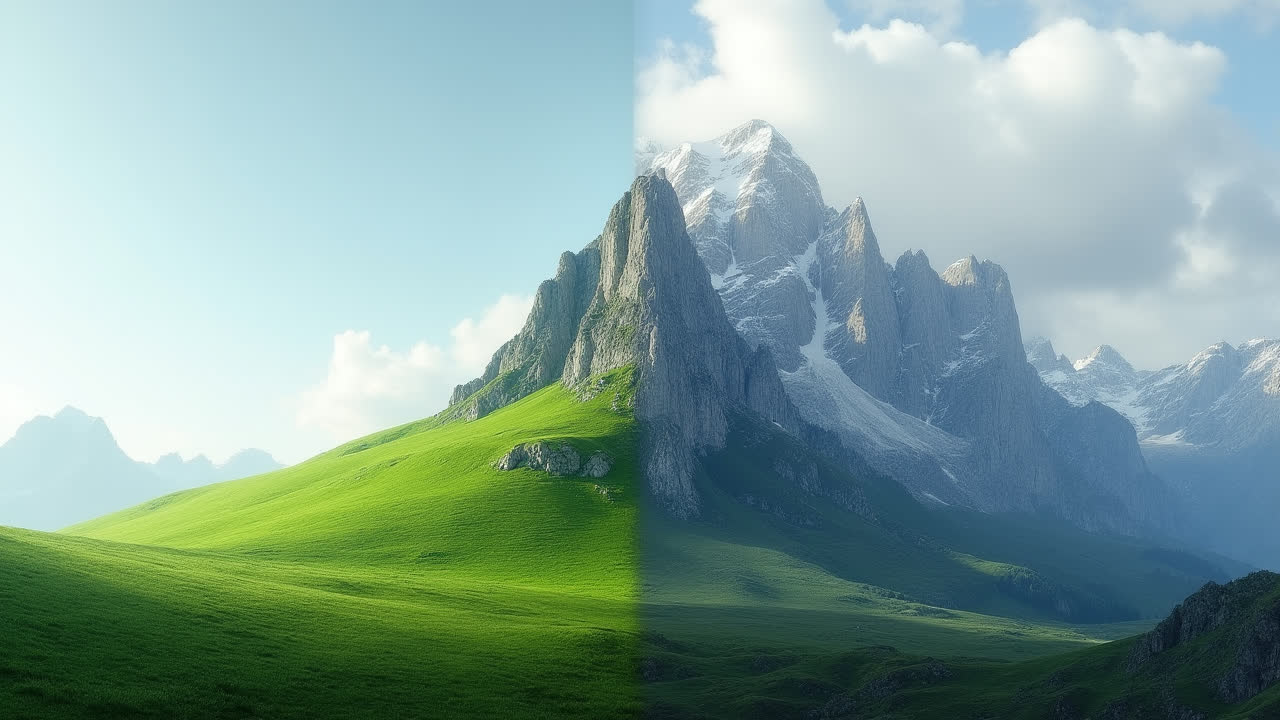
Have you ever gazed at a distant peak and wondered, "Is that a hill or a mountain?" I've found myself pondering this exact question while hiking in various landscapes around the world. The truth is, the distinction isn't as clear-cut as you might think. In this comprehensive guide, we'll explore the fascinating differences between these natural elevations that dominate our landscapes.
Hills and mountains are both elevated landforms that rise above their surrounding terrain, creating some of Earth's most spectacular scenery. While they might seem similar at first glance, several characteristics set them apart. From their formation processes to their impact on local ecosystems and climate, understanding these differences can deepen your appreciation of our planet's diverse geography.
What Defines a Hill?
A hill is essentially a naturally elevated area of land that extends above the surrounding landscape. I once visited the rolling hills of Tuscany, and what struck me most was how gentle and approachable they seemed compared to the imposing Alps visible in the distance. This personal observation aligns with the general characteristics that define hills.
Hills typically feature rounded summits rather than sharp, well-defined peaks. They generally have lower elevations, usually less than 600 meters (about 1,968 feet) above their surroundings. This isn't a hard rule, though—the definition has evolved over time. Interestingly, the United Kingdom and the United States once officially classified hills as summits less than 1,000 feet tall, but both countries abandoned this strict distinction in the mid-twentieth century.
The formation of hills can occur through various geological processes. These include faulting (the movement of rocks beneath the Earth's surface), glacial activity, erosion of surrounding land, and the accumulation of mineral deposits. Some hills are actually the remnants of ancient mountains that have been worn down over millions of years by the relentless forces of nature—wind, water, and ice.
Hills generally have gentler slopes than mountains, making them easier to climb and more accessible to hikers of all skill levels. This accessibility has made hills important cultural and historical sites throughout human history. Many ancient civilizations built settlements on hills for strategic defensive advantages, while others considered them sacred places for worship and ceremonies.
Some famous hills around the world include the Seven Hills of Rome, which played a crucial role in the founding mythology of the ancient city; Silbury Hill in England, which is Europe's tallest prehistoric human-made mound; and the Chocolate Hills of Bohol Island in the Philippines, a geological formation of more than 1,200 conical hills that turn chocolate-brown during the dry season.
Understanding Mountains
Mountains, on the other hand, are more dramatic geological features that command attention on our landscape. I'll never forget my first glimpse of Mount Fuji in Japan—its imposing presence and perfect cone shape left me awestruck in a way that no hill ever has. This visceral reaction highlights the defining characteristics of mountains.
A mountain is typically defined as a large natural elevation with steep slopes and a well-defined summit or peak. Mountains are generally considered to be higher than 600 meters (1,968 feet) above their surroundings, though as with hills, there's no universally accepted height classification. Until the 1920s, the British Ordnance Survey defined mountains as landforms higher than 1,000 feet (304 meters), but this definition was eventually dropped as geographers recognized that height alone doesn't capture the full essence of what makes a mountain.
Mountains often form through powerful geological processes, including tectonic plate movements, volcanic activity, and extreme pressure forces that push the Earth's crust upward. The Himalayan range, home to Mount Everest, continues to grow taller each year as the Indian subcontinent pushes against the Eurasian plate—a dramatic example of mountains in the making.
Due to their significant elevation, mountains create their own climate zones and ecosystems. As you ascend a mountain, you'll notice temperature decreases and vegetation changes. This phenomenon, known as altitudinal zonation, creates diverse habitats that support unique plant and animal species adapted to life at different elevations. Mountains often generate their own weather patterns too, capturing moisture from passing air masses and forcing it upward, resulting in increased precipitation on windward slopes.
Mountains rarely stand alone—they typically form as part of extensive mountain ranges created by the same geological events. The Andes, stretching along South America's western edge for over 7,000 kilometers, exemplify this pattern as the world's longest continental mountain range. The sheer scale and challenging terrain of mountains have made them natural barriers throughout human history, influencing the development and isolation of cultures on either side.
Some of the world's most iconic mountains include Mount Everest (the tallest peak on Earth at 8,848 meters or 29,029 feet), K2 (the second-highest but considered technically more difficult to climb), Kilimanjaro (Africa's highest mountain and one of the few places where you can see snow at the equator), and Mont Blanc (the highest peak in Western Europe).
Key Differences Between Hills and Mountains
| Feature | Hills | Mountains |
|---|---|---|
| Height/Elevation | Generally less than 600 meters (1,968 feet) | Typically higher than 600 meters (1,968 feet) |
| Summit Characteristics | Usually rounded or less defined | Well-defined peak or summit |
| Steepness | Less steep, gentler slopes | Steeper slopes, more dramatic incline |
| Climbing Difficulty | Relatively easy to climb | More challenging, often requiring specialized skills |
| Climate Impact | Minimal effect on local climate | Creates distinct climate zones and weather patterns |
| Ecosystem Diversity | Less variation in ecosystems | Significant biodiversity with altitudinal zonation |
| Formation | Often formed by erosion, faulting, glaciers | Usually formed by tectonic activity, volcanism, severe faulting |
| Occurrence Pattern | Often occur as isolated features | Typically form in ranges or chains |
Formation Processes: How Hills and Mountains Come to Be
The geological origins of hills and mountains reveal fascinating stories of our planet's dynamic nature. Both landforms arise from similar forces, but the scale and intensity of these processes determine whether we end up with a gentle hill or a towering mountain. Let me share what I've learned about these formation processes.
Hills can form through several different mechanisms. Erosion is one common process—when water, wind, and ice wear away surrounding land, the more resistant areas remain as hills. I've seen this firsthand in places like the Scottish Highlands, where ancient mountains have been worn down to hills over millions of years. Glacial activity is another important factor; retreating glaciers often deposit piles of rock and soil called moraines, which can appear as hills in the landscape.
Mountains, by contrast, generally form through more dramatic geological events. Tectonic plate convergence is perhaps the most significant—when two continental plates collide, the tremendous forces push the Earth's crust upward, creating mountain ranges like the Himalayas. Volcanic activity represents another mountain-forming process, building impressive cones like Mount Fuji or Mount Kilimanjaro as magma and volcanic materials accumulate around a vent.
What's particularly fascinating is how hills and mountains can transform into one another over geological time. The Appalachian Mountains in the eastern United States were once as tall as the Himalayas when they formed about 480 million years ago. Today, after hundreds of millions of years of erosion, they're considerably lower—more hill-like in many areas—yet still classified as mountains due to their formation origin and overall structure.
The relationship between hills and mountains isn't static. A dramatic example is the Himalayan range in Nepal. Before becoming the world's tallest mountains, these landforms began as relatively small hills. Their transformation occurred through continuous faulting activity as the Indian subcontinent collided with Asia, demonstrating how geological processes can elevate hills into majestic mountains over time.
Cultural and Practical Significance
Beyond their geological classifications, hills and mountains hold profound cultural and practical significance for human societies throughout history. Their presence has shaped settlement patterns, influenced religious beliefs, and provided practical resources in countless ways. Having visited sacred mountains in several countries, I've witnessed firsthand how these landforms continue to inspire awe and reverence.
Hills have traditionally offered advantageous settlement locations, providing natural defense while avoiding flood-prone valleys. Many of the world's great cities—Rome, Istanbul, San Francisco—developed on hills for these practical reasons. Hills are also typically more accessible for agriculture than mountains, with gentler slopes that can be terraced for farming, as seen in the beautiful hillside vineyards of Portugal's Douro Valley.
Mountains, with their imposing presence, have frequently been associated with the divine across cultures. Mount Olympus in Greek mythology, Mount Sinai in Abrahamic traditions, and Mount Kailash in Hindu, Buddhist, and Jain beliefs all exemplify how mountains have been viewed as dwelling places of gods or sites of spiritual significance. This reverence continues today—I remember feeling a sense of transcendence while hiking in the Andes that went beyond mere appreciation of natural beauty.
In practical terms, mountains serve as crucial water towers for human civilization. Their ability to capture precipitation and store it as snow and ice, which melts gradually to feed rivers, provides essential water resources for millions of people living downstream. The Hindu Kush Himalayan region alone supplies water to over 1.3 billion people across Asia. Mountains also offer unique recreational opportunities, from skiing and snowboarding to rock climbing and mountaineering, supporting tourism economies in many regions.
Both hills and mountains face environmental challenges in the modern era. Climate change is altering mountain ecosystems and melting glaciers at unprecedented rates, while development pressure threatens hillside habitats. Conservation efforts for these landforms not only preserve biodiversity but also protect the cultural heritage and ecological services they provide to human communities.
Frequently Asked Questions
Can a hill become a mountain over time?
Yes, a hill can indeed transform into a mountain through continued geological processes. The most common way this happens is through tectonic activity, where ongoing uplift from colliding plates gradually increases the elevation of a hill until it meets the characteristics of a mountain. The Himalayan range provides a perfect example—these massive mountains began as relatively small hills that were progressively elevated through the continuous collision of the Indian and Eurasian plates. This process isn't quick by human standards, typically taking millions of years.
Why are there no standard definitions for hills and mountains?
The lack of standard definitions stems from the complex nature of geological formations and cultural perspectives. Geography as a science recognizes that landforms exist on a continuum rather than in discrete categories. What might be considered a hill in a highly mountainous region could be viewed as a mountain in flatter terrain. Additionally, different countries and cultures have historically used their own classification systems based on local context. For instance, the UK and US once defined mountains as landforms over 1,000 feet tall but abandoned this simple height criterion as geographers recognized that other factors—including prominence, steepness, and formation process—contribute significantly to a landform's character.
What is the smallest mountain in the world?
Because there's no universally accepted definition of what constitutes a mountain versus a hill, identifying the "smallest mountain" becomes somewhat subjective. However, one frequently cited candidate is Mount Wycheproof in Australia, which stands at just 486 feet (148 meters) above sea level and rises only about 141 feet (43 meters) above the surrounding plains. Despite its modest height, it's officially listed as a mountain in Victorian and Australian classification systems. Another contender is Cavanal Hill in Oklahoma, USA, which advertises itself as the "World's Highest Hill" at 1,999 feet—deliberately staying one foot below what was once considered the minimum height for a mountain in the US, while acknowledging its hill-like characteristics.
Conclusion
The distinction between hills and mountains reveals more about our human need for categorization than it does about fixed natural boundaries. In reality, these landforms exist along a continuous spectrum, with local culture, context, and geological history influencing how we classify them. I've enjoyed exploring both types of terrain and find beauty in the gentle slopes of hills just as in the dramatic peaks of mountains.
While general characteristics help us differentiate between hills and mountains—with hills typically being lower, less steep, and having rounded summits compared to mountains' greater height, steepness, and well-defined peaks—these distinctions aren't absolute. The formation processes, cultural significance, and ecological roles of these landforms share many similarities despite their apparent differences.
What's perhaps most fascinating is the dynamic nature of these geological features. Today's mountains may become tomorrow's hills through erosion, while hills can transform into mountains through continued uplift. This perspective reminds us that Earth's surface is constantly changing, even if those changes occur too slowly for us to perceive in our lifetimes.
Whether you're admiring a rolling hillside or standing in awe before a towering mountain, these elevations represent important chapters in our planet's geological story. They shape our environment, influence our climate, and continue to inspire human cultures around the world. The next time you find yourself debating whether you're looking at a hill or a mountain, perhaps the most important thing isn't the classification but the appreciation of nature's remarkable ability to create such diverse and beautiful landforms.